Last updated: 14 September 2026.
Quick Answer
London buyers now need roughly £35,500 more deposit than the average UK buyer to secure a comparable mortgage rate, according to Zoopla data highlighted in September 2026, compared with an £18,200 national average gap. This is being driven by 2026 mortgage rate rises, with 5-year fixes around 4.8% and 2-year fixed deals sitting between 5.09% and 5.67%, partly amplified by market volatility linked to the Iran conflict. With the Bank of England's next rate decision due on 17 September 2026, London buyers stretching their budgets should treat a full property survey as essential, not optional, before completing.
Key Takeaways
- London buyers face an extra deposit requirement of about £35,500 versus £18,200 nationally, per Zoopla analysis released in September 2026.
- Typical first-time buyer deposits in London (10% deposit) now sit around £44,800.
- Five-year fixed mortgage rates are hovering near 4.8%, while 2-year fixed rates range roughly 5.09% to 5.67% depending on lender and loan-to-value.
- The Bank of England's 17 September 2026 decision could shift fixed-rate pricing within weeks, either way.
- Bigger deposits generally unlock lower loan-to-value bands, which reduce the interest rate lenders charge.
- The permanent Mortgage Guarantee Scheme continues to support 5% deposit mortgages UK-wide.
- Buyers stretching their finances to buy in London should prioritise a full building survey, since a costly repair discovered post-completion can wipe out any deposit savings.
What Are the Current Mortgage Rates in London for September 2026?
London mortgage rates in September 2026 broadly mirror the national picture but bite harder because of higher property values. Five-year fixed rates are averaging close to 4.8%, while 2-year fixed deals range from about 5.09% at low loan-to-value bands up to 5.67% for buyers with smaller deposits.
Several forces have pushed rates higher through 2026:
- Gilt market volatility tied partly to the Iran conflict, which has pushed swap rates up and made lenders more cautious on pricing.
- Persistent inflation pressure, keeping the Bank of England reluctant to cut base rate quickly.
- Lender risk repricing on higher loan-to-value products, widening the gap between 5% deposit and 25% deposit rates.
The Bank of England's Monetary Policy Committee meets on 17 September 2026. Whatever direction the base rate moves, lenders typically reprice fixed-rate products within days, so buyers close to completion should lock rates early rather than wait to see what happens on decision day.
The £35,500 London Deposit Gap Explained
The core finding from Zoopla's September 2026 analysis is stark: London buyers must find roughly £35,500 in extra deposit to offset this year's mortgage rate rises, almost double the £18,200 extra deposit needed by the average UK buyer. This gap exists because London's higher average property prices mean the same percentage-point rate rise translates into a much larger cash sum.
Why the gap is nearly double the national figure:
- London property values remain significantly above the UK average, so every 0.1% rate increase costs London buyers more in absolute terms.
- First-time buyer deposits in London (at 10%) now average around £44,800, compared with far lower typical deposits in most other UK regions.
- Buyers need this extra deposit specifically to hold their monthly repayment steady despite higher rates, not to buy a more expensive home.
"London buyers aren't just facing higher prices, they're facing a rate environment that punishes smaller deposits far more severely than it did a year ago."
Industry commentary through mid-2026 suggests this burden is likely to persist into late 2026 unless interest rates fall substantially or new targeted support schemes emerge. Lenders remain cautious, and high-LTV products still carry noticeably higher pricing than lower-LTV equivalents.
Does Putting Down a Bigger Deposit Lower Your Mortgage Rate?
Yes. Increasing your deposit moves you into a lower loan-to-value (LTV) band, and lenders reward lower LTV bands with cheaper rates because their risk exposure drops. This is the single biggest lever London buyers control when trying to close the deposit gap.
Typical LTV bands and how they affect pricing in September 2026:
| Deposit size | Approx. LTV | Rate impact |
|---|
| 5% | 95% | Highest rates, roughly 5.4-5.6% on 2-year fixes |
| 10% | 90% | Slightly lower, near 5.2-5.4% |
| 15% | 85% | Noticeable improvement, closer to 5.1% |
| 20%+ | 80% or below | Best available pricing, often near or below 4.8% on 5-year fixes |
Decision rule: if you can push your deposit from 10% to 15% or 20%, even by a few thousand pounds, request updated quotes before applying. The rate difference across LTV bands can be worth more over five years than the extra deposit itself.
Common mistake: buyers assume a 5% jump in deposit percentage always crosses a pricing threshold. In reality, lenders set their own LTV bands, so check whether your new deposit actually crosses a named tier (90%, 85%, 80%) rather than just adding cash randomly.
London First-Time Buyer Mortgage Rates
First-time buyers in London face the sharpest end of the extra deposit problem because they typically start with the smallest deposits and highest LTV mortgages. A typical London first-time buyer with a 10% deposit is now putting down around £44,800, and paying a materially higher rate than someone with a 20% deposit.
Options worth exploring for London first-time buyers this month:
- The government's permanent Mortgage Guarantee Scheme, which supports 5% deposit mortgages across the UK, including London.
- Developer "deposit boost" schemes offered by builders such as Barratt Homes and Charles Church, which effectively top up a buyer's deposit without requiring extra personal savings.
- Comparing overall cash requirements, not just the deposit, since stamp duty, legal fees, and survey costs add several thousand pounds on top of the deposit itself.
Best Mortgage Deals in London for September 2026 With a Larger Deposit
The best available London mortgage deals in September 2026 sit at 80% LTV or below, where 5-year fixed rates cluster near 4.8%. Buyers who can reach a 20% deposit typically access the most competitive pricing currently on the market.
Practical steps to secure a stronger deal:
- Check whether a small additional deposit crosses an LTV threshold (95% to 90%, 90% to 85%, and so on).
- Compare 2-year and 5-year fixes side by side, since 5-year rates near 4.8% may beat 2-year rates above 5.5% over a longer horizon.
- Ask your broker to re-run affordability once your deposit is confirmed, since some lenders adjust pricing weekly.
- Factor in the cost of a property survey when comparing net affordability, not just the headline mortgage rate.
London Buy-to-Let Buyers Face the Sharpest Squeeze
Buy-to-let buyers in London face similarly elevated rates in September 2026, and often need larger deposits than owner-occupiers to satisfy lender stress tests. Most buy-to-let lenders require a minimum 25% deposit, and rates at that LTV are generally higher than equivalent owner-occupier products because of the added rental income stress testing lenders apply.
For investors, an extra deposit does two jobs at once: it lowers the mortgage rate and improves the rental cover ratio lenders assess. Given London's higher purchase prices, the £35,500 extra deposit gap identified by Zoopla hits buy-to-let investors particularly hard, since it compounds with the already-larger deposit requirement for investment property.
Can I Get a Better Rate If I Increase My Deposit After Applying?
Yes, in many cases lenders will requote if your deposit increases before completion, but you must tell them promptly and it can affect your mortgage offer's validity period. This is worth raising with your broker as soon as extra funds become available, rather than waiting until near completion.
What typically happens if your deposit changes:
- Deposit increases: the lender may offer a lower rate if the new figure crosses an LTV band, but they will usually need to reassess the application.
- Deposit falls short: if you cannot maintain the agreed deposit amount, most lenders will requote at a higher rate matching the new, higher LTV, and in some cases the mortgage offer can be withdrawn entirely if affordability no longer stacks up.
- Edge case: gifted deposits from family that arrive late in the process can trigger a fresh affordability check, so confirm timing well before your target completion date.
Are Mortgage Rates Different Across London Boroughs?
Mortgage rates themselves do not vary by borough, since lenders price on national risk factors, LTV, and credit profile rather than postcode. However, the effective cost of borrowing differs sharply across London because average property prices vary so much between boroughs.
- Buyers in higher-priced boroughs need larger absolute deposits to reach the same LTV band as buyers in lower-priced boroughs.
- The £35,500 average extra deposit figure understates the gap in prime boroughs and overstates it in outer London areas with lower average prices.
- Approval timelines for larger-deposit applications in London typically run four to six weeks from full application to formal mortgage offer, though this can extend if a lender requests further documentation on deposit source.
Common Mistakes First-Time Buyers Make With Deposits in London
The most frequent and costly mistake is treating the deposit as the only cash requirement, ignoring stamp duty, legal fees, and survey costs until late in the process. This leaves buyers scrambling for extra funds right before completion, often at the worst possible time to negotiate.
Other frequent errors:
- Assuming a 5% deposit mortgage is available for any property type, when many new-build flats and non-standard construction properties require higher minimum deposits.
- Skipping a full structural survey to save money, then discovering expensive defects after completion when there is no cash buffer left.
- Locking a rate too early without checking whether a slightly delayed completion could allow time to boost the deposit into a cheaper LTV band.
- Underestimating how mortgage guarantee scheme rules interact with lender-specific criteria, since not every 5% deposit product is available on every property.
Why Property Surveys Matter More When Buyers Stretch Their Deposit
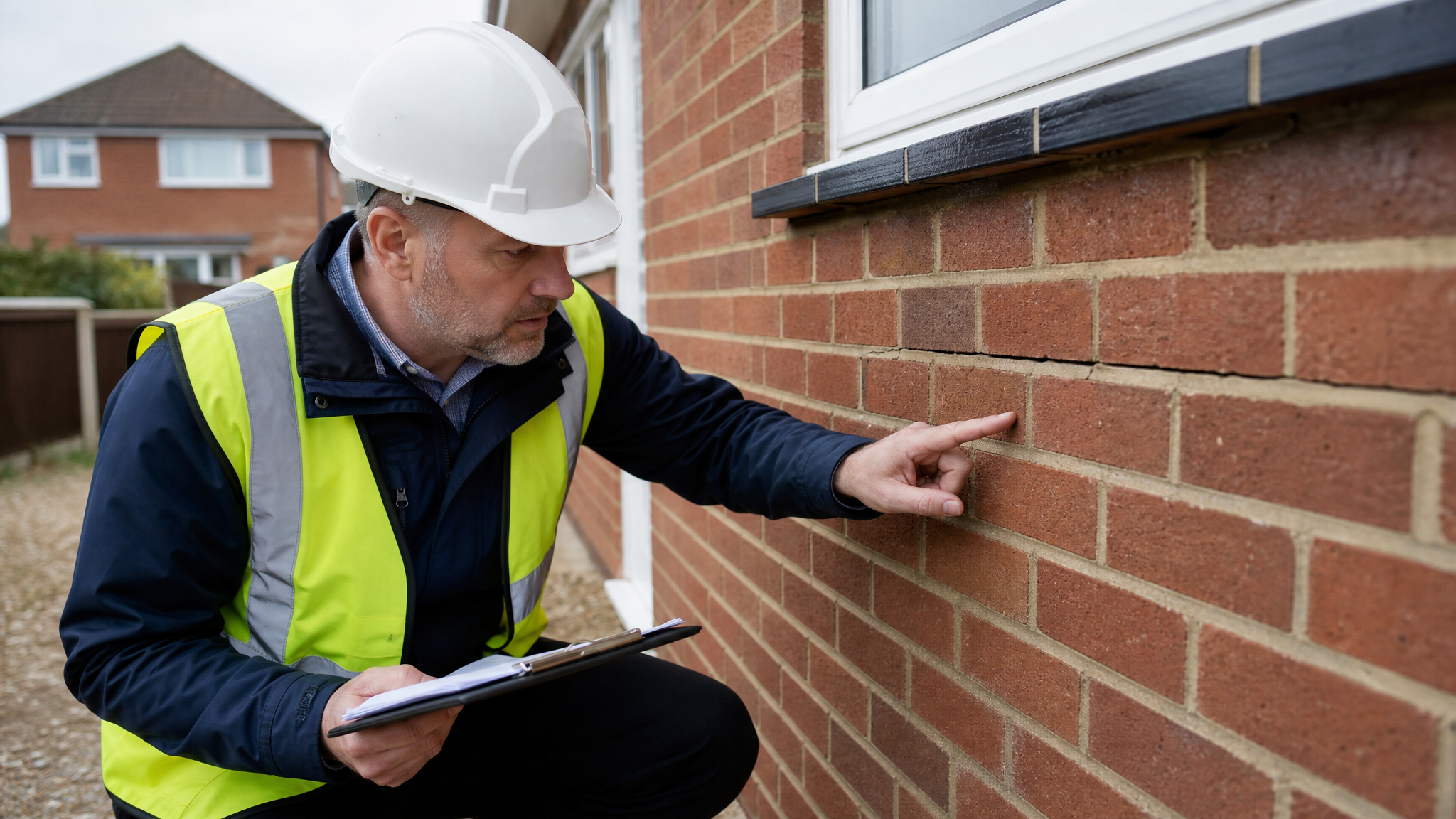
A property survey becomes financially critical, not optional, when a buyer has committed nearly every available pound to a deposit and mortgage repayments at today's higher London rates. Buyers with little financial slack cannot absorb a surprise £15,000 repair bill discovered after completion.
For surveyors and buyers alike, this September 2026 rate environment raises the stakes of the pre-purchase survey in several concrete ways:
- Buyers stretching to a 90% or 95% LTV mortgage have less cash reserve for unexpected repairs than buyers with 20% deposits.
- A RICS Level 2 or Level 3 building survey can identify structural issues, damp, or subsidence risk before exchange, giving buyers grounds to renegotiate price or walk away.
- Lenders' own valuations are not a substitute for an independent survey, since valuations confirm security for the loan, not the condition of the property for the buyer.
- Surveyors advising clients this month should flag that in a market where every extra pound of deposit is being fought for, a survey that uncovers a price-reducing defect can be worth far more than its fee.
FAQ
How much extra deposit do London buyers need in September 2026?
Zoopla data shared in September 2026 shows London buyers need roughly £35,500 extra deposit compared with £18,200 nationally, to offset this year's mortgage rate rises.
What is the current 5-year fixed mortgage rate in London?
Five-year fixed rates are averaging around 4.8% in September 2026, though exact pricing depends on deposit size and lender.
What is the current 2-year fixed mortgage rate in London?
Two-year fixed rates range roughly between 5.09% and 5.67%, with lower loan-to-value mortgages securing the cheaper end of that range.
Does a bigger deposit always get a better mortgage rate?
Generally yes, because a larger deposit moves the loan into a lower loan-to-value band, and lenders price lower LTV bands more cheaply. The saving only applies if the increase crosses a lender's specific LTV threshold.
Why does the Bank of England's 17 September 2026 decision matter?
Lenders often reprice fixed-rate mortgage products within days of a base rate decision, so buyers near completion should consider locking a rate ahead of 17 September 2026 rather than risk a post-decision increase.
Should I still get a survey if I'm stretching my deposit to buy in London?
Yes. Buyers with smaller cash reserves after a large deposit outlay are the most exposed to unexpected repair costs, making an independent property survey one of the most cost-effective protections available before completion.
Conclusion
London's mortgage market in September 2026 is squeezing buyers from two directions: higher rates and a widening extra deposit requirement that now averages £35,500, nearly double the national figure. Whether the Bank of England's 17 September decision brings relief or further caution, the fundamentals for London buyers stay the same this autumn: a larger deposit generally buys a meaningfully cheaper rate, but only if it clears the right LTV threshold, and every pound committed to that deposit reduces the cash buffer available for surprises after completion.
Before exchanging contracts, London buyers should confirm their deposit crosses a genuine LTV pricing tier, lock a rate ahead of the Bank of England decision if completion is imminent, and commission a full property survey rather than relying solely on a lender's valuation. For buyers already stretched to afford a London home, a thorough survey is one of the few remaining safeguards against costs that no amount of extra deposit can absorb after the fact.