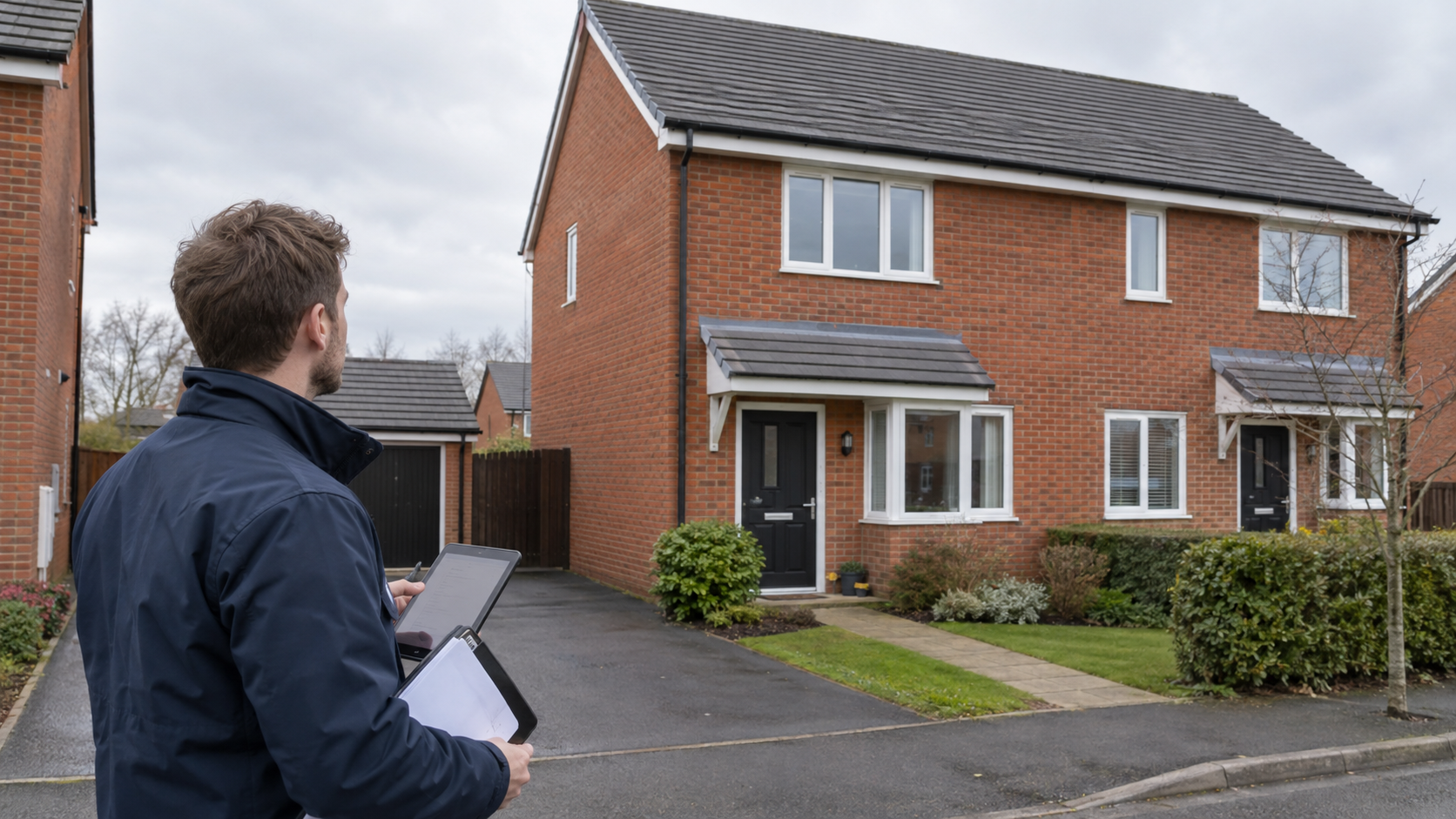
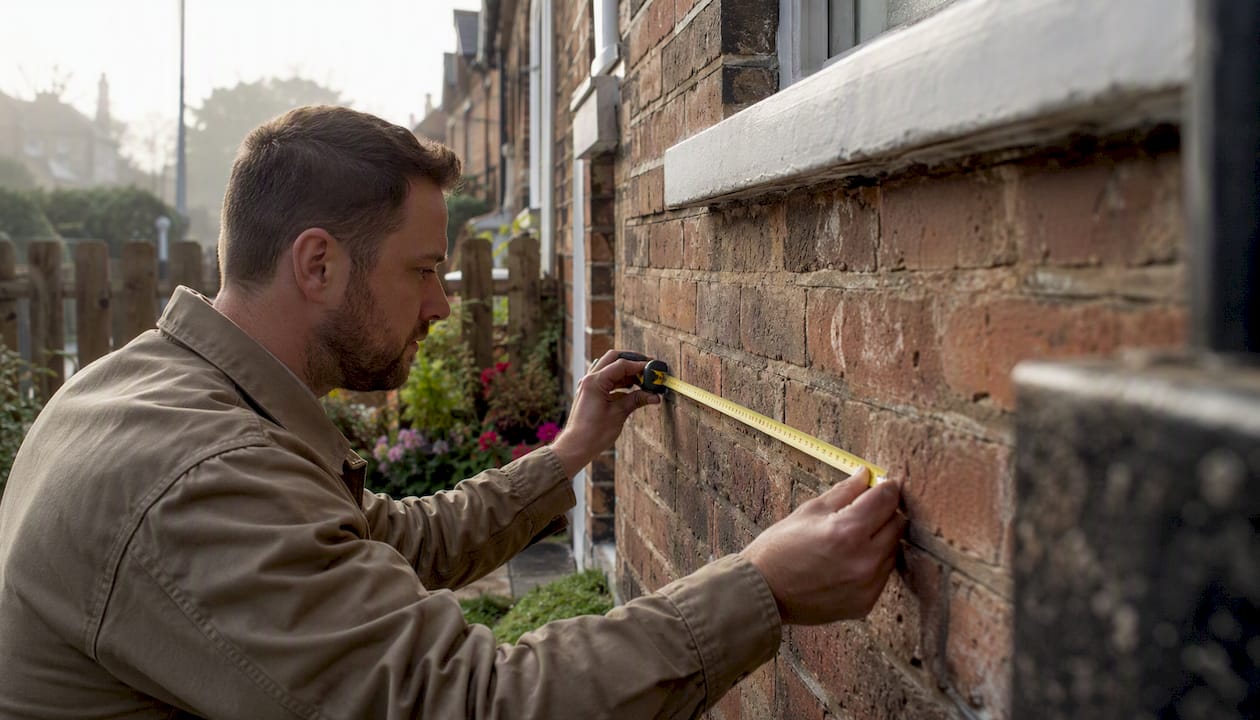
Offers on country homes have dropped by a tenth in a single quarter. That is not a typo. New figures released this week show the market for larger homes outside London has tipped firmly into buyers' territory, and the latest Knight Frank and Savills data gives anyone selling, or hoping to buy, a rural property real numbers to work with. For buyers weighing up whether to commission a survey before they make an offer, this is the moment that caution pays off.
Knight Frank's latest Country market review, covering homes priced above £750,000 outside London, found average prices down 4.2% in the year to September 2026, according to Property Industry Eye on 12 October 2026. Exchanges fell 2% year on year in the third quarter, and offers made fell by 10%. Savills, reporting separately via Estate Agent Today on the same day, confirmed the same direction of travel: prime regional markets down 1.5% in the quarter and 4.1% annually, with country houses now sitting 5.0% below where they were a year ago.
This article explains what is driving the slowdown, how it is playing out by region, and why a proper RICS survey is now one of the sharpest tools a buyer has for both protecting their mortgage offer and negotiating a fair price.
Key Takeaways
- Knight Frank reports country house prices (over £750,000, outside London) down 4.2% annually to September 2026, though this is an improvement on a 5% fall recorded in June.
- Offers made on country homes fell 10% in Q3 2026 and exchanges were down 2% year on year, per Knight Frank via Property Industry Eye.
- Savills found higher-value homes falling faster (down 5.5%) than sub-£1 million properties (down 2.9%), with the Midlands, North, Scotland and Wales proving more resilient than the South.
- Average five-year fixed mortgage rates reached 6% in October 2026, the highest since September 2023, according to Moneyfacts, while Bank of England data shows August mortgage approvals 14% below the five-year average.
- In a market where sellers are already cutting asking prices, a detailed building survey gives buyers evidence-based leverage and protects against lender down-valuations.
Knight Frank Country House Prices Fall 4.2% in Q3 2026: The Headline Numbers
The Knight Frank figures are the clearest signal yet that the country house market has cooled from its post-pandemic highs. According to Property Industry Eye's report of 12 October 2026, average prices across the Country market fell 4.2% in the year to September, a modest improvement on the 5% annual fall recorded back in June. That slight narrowing suggests the decline may be levelling off rather than accelerating, but the transaction data tells a more cautious story.
Exchanges in Q3 2026 were down 2% compared with the same quarter last year, while offers made on country properties dropped by a sharper 10%. In other words, fewer buyers are putting pen to paper, even where deals do eventually complete.
James Cleland, Knight Frank's head of Country sales, described sentiment as "brittle due to the uncertainty of what will be in the Burnham administration's first Budget." He added that buyers and sellers are "struggling to find a steady footing," though he was clear that well-priced properties are still attracting good levels of interest. That last point matters: this is not a market where every home is stuck. It is a market that punishes ambitious pricing and rewards realism, which is exactly the environment where an independent survey report becomes a powerful negotiating document.
Savills Confirms the Slowdown, With Regional Variation
Savills' Q3 2026 data, published by Estate Agent Today on 12 October 2026, backs up the Knight Frank numbers and adds useful regional texture. Prime regional markets fell 1.5% in the quarter and 4.1% over the year. The pain is not evenly spread: higher-value homes dropped 5.5% annually, far outpacing the 2.9% fall seen in sub-£1 million properties.
Geographically, the Midlands, North, Scotland and Wales have proved the most resilient, with quarterly falls under 1%. By contrast, the London commuter belt and wider South fell around 2% in the quarter. Frances McDonald of Savills noted that "the wider South and London's commuter belt is feeling a ripple effect from a lack of movers," and observed that transactions on country homes are taking longer to complete, with early signs that new stock supply is tightening in some locations. Notably, the Cotswolds and Surrey are bucking the wider trend and outperforming their neighbouring areas.
Why Mortgage Rates and Approvals Matter Too
Behind the headline price falls sits a tougher borrowing environment. Moneyfacts puts the average five-year fixed mortgage rate at 6% in October 2026, the highest level since September 2023. That is a meaningful jump in monthly cost for anyone remortgaging or buying with a large loan, and it is squeezing demand precisely in the higher-value bracket Knight Frank and Savills are tracking.
Bank of England data shows August mortgage approvals running 14% below the five-year average, a sign that fewer buyers are getting to the finishing line at all. Meanwhile, Lloyds Bank's house price index recorded flat UK prices in September 2026, with the average property at £298,441 and annual growth at 0.0%. The national picture is stagnant; the country house segment is where the real falls are concentrated.
All eyes are now on the Autumn Budget, due on 28 October 2026. Until buyers and sellers know what it contains, the "brittle" sentiment Cleland describes is unlikely to settle.
What a Buyers' Market Means for Surveys and Valuations
When offers are dropping faster than exchanges, it tells you something important: buyers are negotiating harder and walking away more often before they commit. A thorough, independent survey is how serious buyers back up that negotiating position with facts rather than guesswork.
Country and commuter-belt properties tend to be older, larger, and structurally more complicated than a typical new-build flat. Many have outbuildings, extensions from different eras, septic tanks or private drainage, and construction types that do not fit neatly into a standard mortgage valuer's checklist. This is exactly why a RICS Level 3 building survey, rather than a basic Level 2 homebuyer report, should be the default choice for most rural and period homes.
Level 2 vs Level 3 Survey: Which One Do You Need?
| Feature | RICS Level 2 Homebuyer Report | RICS Level 3 Building Survey |
|---|
| Best suited to | Conventional, reasonably modern homes in good condition | Older, larger, or non-standard construction properties, including most country houses |
| Depth of inspection | Visual condition report with traffic-light ratings | Detailed structural inspection, including roof voids, drainage, and outbuildings |
| Covers damp and timber | Basic commentary | In-depth investigation and likely causes |
| Repair cost estimates | Limited | Detailed, with recommendations for further investigation |
| Typical property age | Post-1950s, standard build | Period homes, listed buildings, thatched or timber-frame properties |
| Negotiating value | Useful | Strong, due to detailed evidence |
For a country house with a slate roof older than its last three owners, a private water supply, or a barn conversion attached, a Level 3 survey is worth the extra cost. It identifies issues a standard valuation will never catch.
Using Survey Findings as Negotiating Leverage
In a market where Knight Frank reports offers down 10% and sellers are already adjusting expectations, a survey report that flags a tired roof, rising damp, or an ageing oil tank is not bad news for a buyer. It is leverage. Sellers in a softer market are far more likely to accept a price reduction or agree to fund repairs when faced with a clear, professional report than they would have been twelve months ago when demand was stronger.
Buyers should treat the survey not as a final hurdle before completion, but as a tool to use early, ideally before exchanging contracts, so there is room to renegotiate or walk away.
The Down-Valuation Risk When Lenders See Falling Comparables
Falling prices create a second risk that buyers often overlook: mortgage down-valuations. With Knight Frank recording a 4.2% annual fall in country house prices and Savills reporting a similar 4.1% drop across prime regional markets, lenders' valuers are working from comparable sales that are increasingly out of date or already higher than the current market will bear.
If a lender's valuer prices a property below the agreed purchase price, buyers can be left needing a larger deposit or forced back to the negotiating table. A good independent survey, commissioned alongside or instead of relying solely on the lender's valuation, gives buyers an early, realistic view of condition and value, reducing the chance of an unwelcome surprise late in the process.
How to Compare Surveyor Quotes and Turnaround Times
With average mortgage rates at 6%, according to Moneyfacts, and approvals running well below average, speed matters. Buyers do not want survey delays adding weeks to an already slow transaction, particularly with Savills noting that country home transactions are already taking longer to complete.
A sensible approach is to:
- Request quotes from several RICS-regulated surveyors rather than accepting the first one offered.
- Ask for realistic turnaround times, from booking to receiving the final report.
- Confirm the surveyor has local experience with rural properties, non-standard construction, or listed buildings if relevant.
- Check what is included, particularly for outbuildings, land, and drainage, which standard reports sometimes exclude.
Survey Merchant allows buyers and sellers to compare quotes from RICS surveyors across the UK in one place, making it straightforward to weigh up price, availability, and experience before instructing a survey.
Frequently Asked Questions
Is now a good time to buy a country house?
Prices are falling and offers are down, according to Knight Frank and Savills data for Q3 2026, which gives buyers more negotiating room than in recent years. However, higher mortgage rates mean affordability remains a challenge for many.
Why are country house prices falling faster than the national average?
Lloyds Bank recorded flat UK house prices overall in September 2026, while Knight Frank and Savills both found sharper falls in the higher-value country and prime regional segments, driven by weaker demand and higher borrowing costs for larger purchases.
Do I need a Level 3 survey for a country home?
For most older, larger, or non-standard rural properties, yes. A RICS Level 3 building survey offers far more detailed structural, drainage, and roofing checks than a Level 2 homebuyer report.
Can a survey help me negotiate a lower price?
Yes. In a softer market, sellers are more receptive to price adjustments supported by a detailed, independent survey report highlighting genuine defects or required repairs.
What is a mortgage down-valuation and why does it matter now?
A down-valuation happens when a lender's valuer assesses a property below the agreed purchase price. With prices falling across country and prime regional markets, this risk is higher, making an independent survey a useful safeguard.
Conclusion
The data is consistent across both major agencies: Knight Frank's 4.2% annual fall in country house prices, alongside Savills' 4.1% annual decline in prime regional markets, confirms a genuine shift in bargaining power toward buyers. Add in six per cent five-year fixed mortgage rates and mortgage approvals running well below average, and the case for careful due diligence has rarely been stronger.
Buyers currently considering a country or commuter-belt purchase should treat a RICS Level 3 survey as standard practice, not an optional extra, and use its findings actively in negotiations. With the Autumn Budget on 28 October 2026 likely to shape sentiment further, acting on solid survey evidence now, rather than waiting, is the safer path. Compare quotes from RICS surveyors through Survey Merchant to find the right professional and timescale for your purchase before committing.