We use cookies to improve your experience on our site, analyze site traffic, and assist in our marketing efforts. By clicking "Accept all," you agree to the storing of cookies on your device. You can choose to "Reject all" non-essential cookies. For more information, please read our Cookie Policy.
Buying an Ex-Rental Home in October 2026: Survey Checklist as 35% of Landlords Sell Up
As landlords exit the private rented sector, more ex-rental homes are reaching the market. October 2026 briefing: Rightmove, Ringley and Fleet data, what a RICS survey finds in former lettings, and how to negotiate.
More than a third of private landlords sold or tried to sell in the past year, according to Ringley Group data reported by Landlord Today on 16 October 2026. That single figure explains why so many "ex-rental" homes are now appearing on sale listings across England and Wales, and why buyers need to think carefully before making an offer.
Buying an ex-rental home is fast becoming one of the defining property stories of the autumn 2026 market. As landlords exit or consolidate, buyers are finding former rental stock priced competitively, but often carrying wear and tear that a standard viewing will never reveal. This article explains why the supply shift is happening, what a RICS surveyor typically finds in former lettings, and what both buyers and landlords should do next.
Key Takeaways
An estimated 35% of private landlords sold or tried to sell in the past 12 months, and the English private rented sector shrank by roughly 354,000 homes in the three years to May 2025 (Ringley Group, reported 16 October 2026).
About 13% of homes currently for sale were previously rentals, up from 12% a year ago (Rightmove, 15 October 2026).
Around one in ten privately rented homes has a category 1 hazard, a figure cited in the new Awaab's Law consultation for the private rented sector (MHCLG).
A Level 2 or Level 3 RICS survey is the most reliable way to spot damp, poor rewiring, HMO alterations and certification gaps before you commit.
Mortgage rates are moving: five-year fixes briefly topped 6% in early October before NatWest cut selected deals to 4.98% from 15 October (Tembo).
Why So Many Ex-Rental Homes Are Hitting the Market in October 2026
The rental sector is contracting while rents keep climbing. Rightmove reported on 15 October 2026 that the average asking rent outside London hit a record £1,418 per calendar month, the first time it has passed £1,400, up 2.4% annually. London asking rents reached a record £2,825, up 3.2%. Yet available rental homes nationally are down 2% year on year, and in London listings are down 9% even as renter demand there has risen 6%. As Rightmove's Colleen Babcock put it: "Average rents have reached another new record and have now surpassed £1,400 per month outside London for the first time."
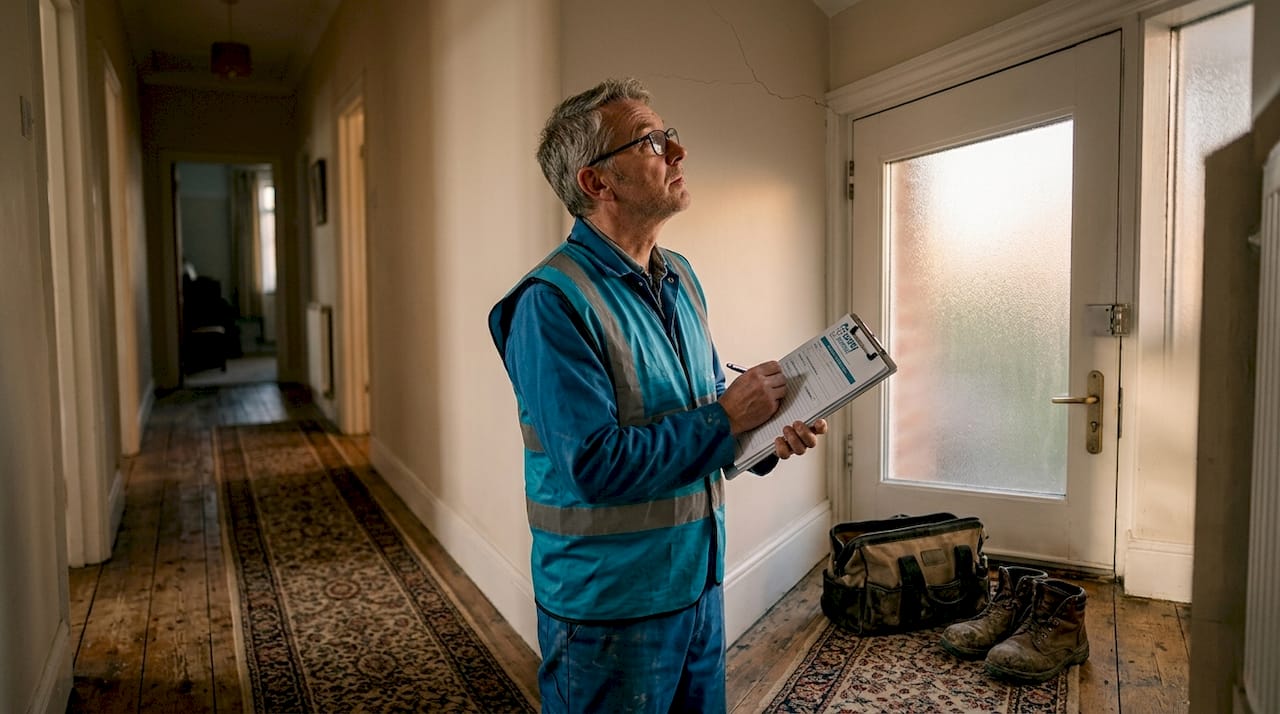
More former rental homes are reaching the sales market as smaller landlords exit.
Behind those numbers sits a supply story. Ringley Group estimates the English private rented sector shrank by around 354,000 homes in the three years to May 2025, and that asking rents in the UK's 21 largest towns and cities rose 6% in the three months after the Renters' Rights Act took effect. Fleet Mortgages' Q3 2026 Buy-to-Let Rental Barometer, reported on 13 October 2026, adds nuance: the average gross yield sits at 7.9% in England and Wales, applications from landlords with one to three properties fell to 24% from 29% in the previous quarter, and the average portfolio size grew to 18 properties from 12 a year ago. Fleet's Steve Cox cautioned that "we should be careful about interpreting either of those movements as landlords stepping away from buy-to-let" — the picture is of smaller landlords exiting while larger ones consolidate.
For buyers, the upshot is straightforward: Rightmove data shows roughly 13% of homes for sale were previously rentals, up from 12% a year earlier. That is more choice, sometimes at a negotiable price, but it also means more homes that spent years under tenant occupation rather than owner-occupier care.
What a RICS Survey Checks in an Ex-Rental Home
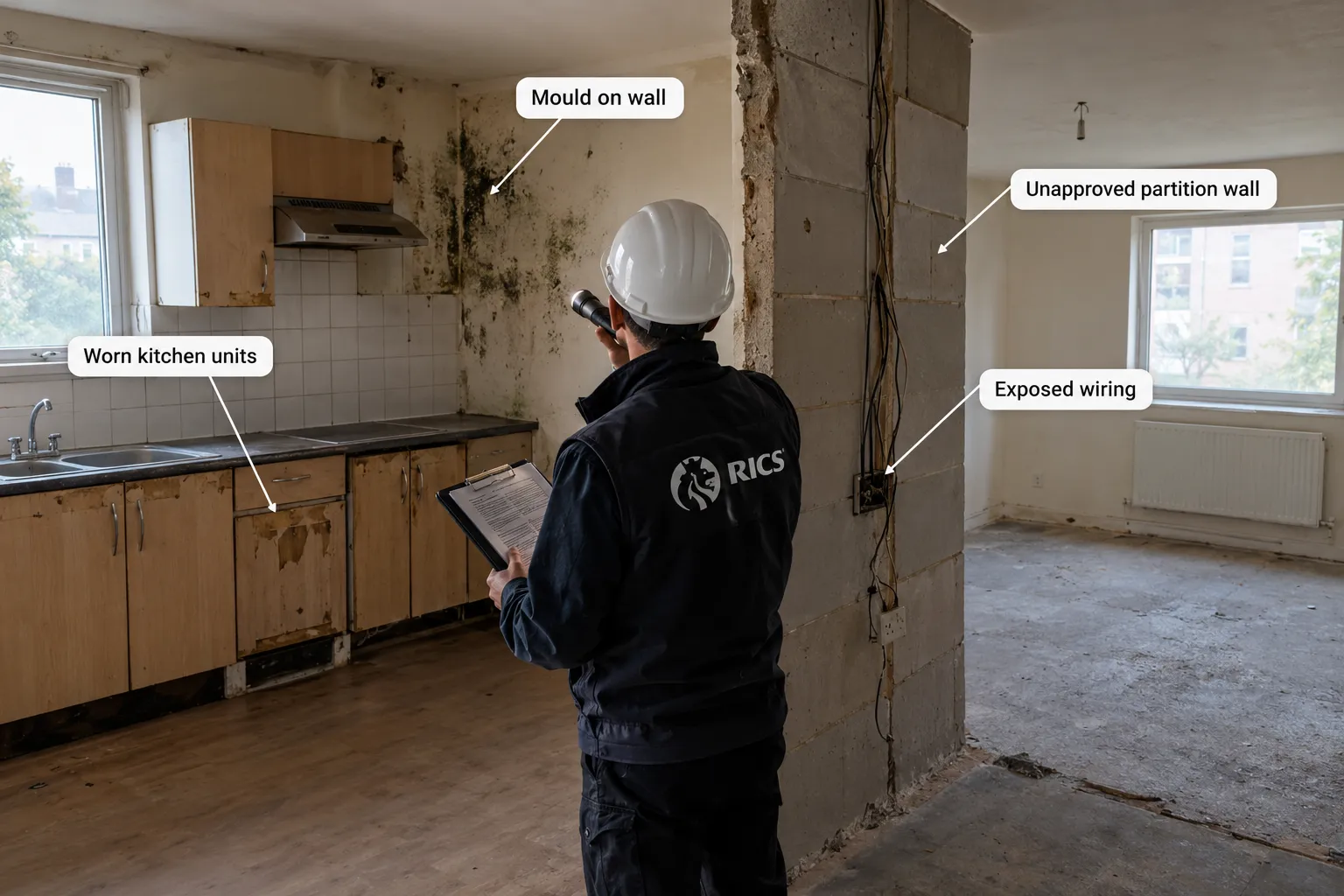
A former rental property can look perfectly presentable on a listing and still hide expensive problems. This is where a Level 2 (Home Survey) or Level 3 (Building Survey) RICS inspection earns its fee. Surveyors who regularly inspect ex-rental stock tend to flag a recognisable pattern of issues.
Condensation, damp and rushed repairs are among the most common findings in former lettings.
Common findings in former rental homes include:
Issue
What it looks like
Why it matters
Condensation, damp and mould
Staining around windows, bathrooms, cold walls
Health risk; often linked to poor ventilation under tenancy
Worn kitchens and bathrooms
Chipped units, failed sealant, dated sanitaryware
Near-term replacement cost
Rushed or poor-quality repairs
Mismatched paint, uneven plaster, DIY patch jobs
May mask a bigger underlying fault
Electrical and gas certification gaps
No recent EICR or gas safety record available
Surveyor will recommend further checks before exchange
A surveyor will not issue certificates themselves, but a good report will clearly recommend that buyers obtain an up-to-date EICR and gas safety record from the seller's agent before proceeding to exchange, particularly if the property was tenanted within the last 12 months.
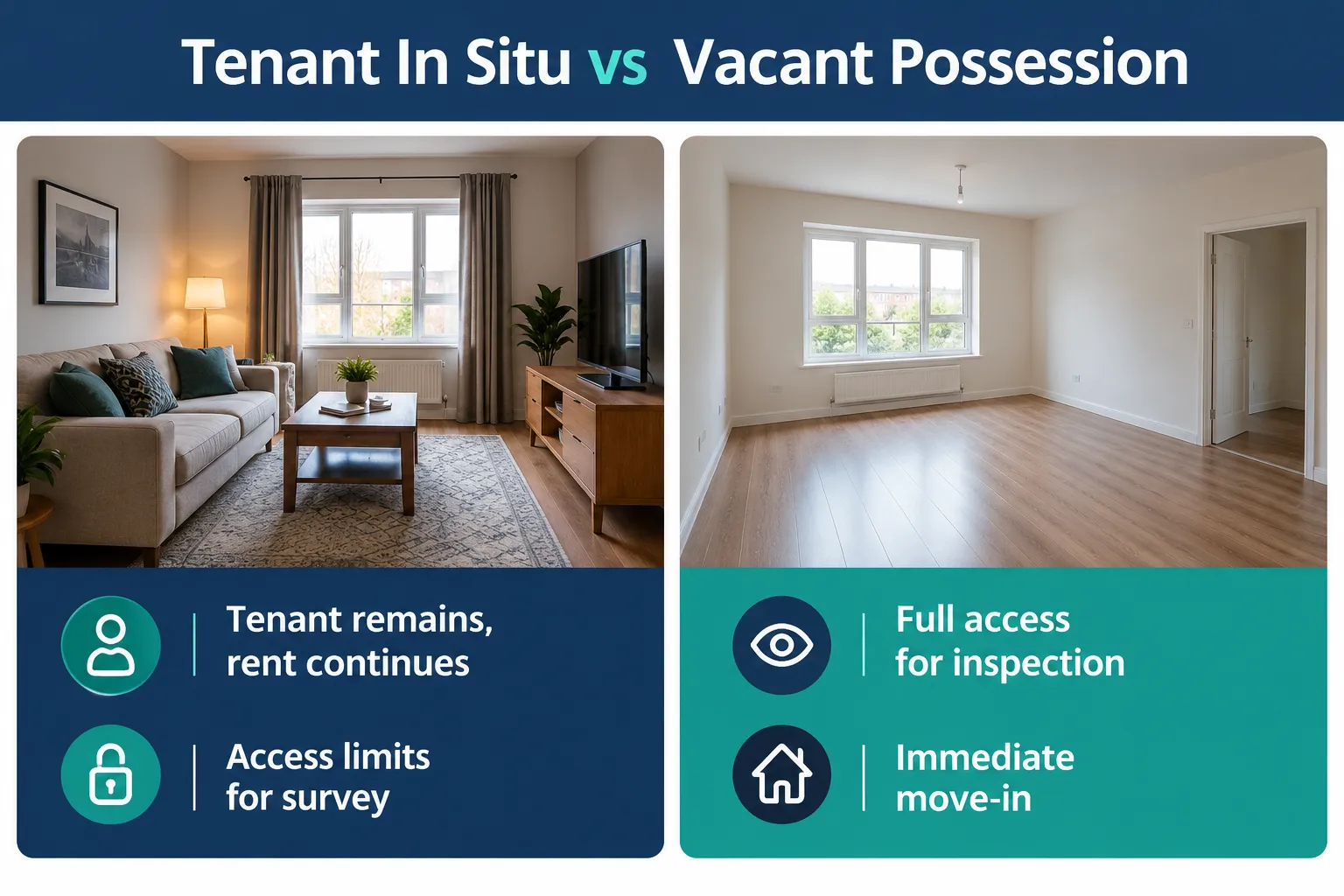
Tenant in Situ vs Vacant Possession: General Points
Some ex-rental homes come to market with a tenant still living there; others are sold with vacant possession after the tenancy ends. As a general rule, buying with a tenant in situ can mean:
Restricted access for viewings and surveys, since inspections must respect the tenant's right to notice
Continued rental income if you intend to remain a landlord
Fewer opportunities to inspect areas like lofts, under floors or behind furniture before completion
Vacant possession, by contrast, typically allows:
A fuller, unobstructed survey of every room
Immediate move-in or renovation after completion
No tenancy paperwork or deposit obligations to inherit
Neither route is automatically better — it depends on whether the buyer wants to live in the property or continue letting it. Either way, a full survey before exchange remains the standard safeguard.
Negotiating After the Survey
A survey report listing damp, worn fittings or missing certification is not just a warning; it is a negotiating tool. Buyers typically use the findings to request a price reduction, ask the seller to complete specific repairs before completion, or secure a retention held back until certification (such as an EICR) is provided. With UK average house prices at £273,000 in July 2026, up 1.4% annually, and London prices down 3.3% (ONS, 16 September 2026), there is more room in some markets for buyers to hold firm on post-survey requests than there was a year ago.
For Landlords: Category 1 Hazards and Awaab's Law Readiness
Landlords selling in 2026 face their own pressures. MHCLG figures cited alongside the Awaab's Law private rented sector consultation, which opened on 9 October 2026 and closes on 18 December 2026, show around one in ten privately rented homes has a category 1 hazard, the most serious classification under the Housing Health and Safety Rating System. Landlords planning to sell should address outstanding hazards before marketing, both to avoid delays once a buyer's survey flags them and to prepare for the extended compliance duties likely to follow the consultation. Propertymark's Tenancy Conclusion Index recorded 2,625 tenancies processed in September 2026, a reminder that tenancy turnover, and the condition checks that come with it, remains a constant feature of the market.
What to Watch: Budget and Bank of England
Two dates matter for anyone buying or selling an ex-rental home this autumn. The Budget on 28 October 2026 could affect landlord taxation, stamp duty or housing policy, with knock-on effects for how many more rental homes come to market. The Bank of England's November decision will also shape mortgage pricing: average five-year fixed rates briefly passed 6% in early October before NatWest trimmed selected five-year fixes to 4.98% from 15 October, according to Tembo. Buyers weighing an offer on a former rental should factor both events into their timeline before locking in a mortgage product.
FAQ
Is it riskier to buy a home that used to be rented out?
Not inherently riskier, but former rentals can carry more wear from tenant turnover and sometimes rushed landlord repairs. A Level 2 or Level 3 RICS survey is the best way to establish actual condition.
Should I ask for an EICR or gas safety certificate before buying?
Yes. If the surveyor cannot confirm recent certification, it is reasonable to request the most recent EICR and gas safety record from the seller before exchange.
Why are so many landlords selling in 2026?
Ringley Group estimates 35% of private landlords sold or tried to sell in the past 12 months, against a backdrop of the Renters' Rights Act and regulatory uncertainty, while Fleet Mortgages data shows smaller landlords exiting as larger portfolios consolidate.
Does a tenant in situ affect my survey?
It can limit access for inspection, since surveyors and agents must respect the tenant's notice rights. Vacant possession generally allows a fuller inspection.
What is the Awaab's Law consultation and why does it matter for sellers?
It is a government consultation, open from 9 October to 18 December 2026, on extending Awaab's Law's binding hazard-repair timescales to private landlords. It matters because roughly one in ten rented homes currently has a category 1 hazard, and buyers' surveys will pick these up.
Conclusion
The rental market's contraction is reshaping the sales market, pushing more ex-rental homes, some well maintained and some not, onto estate agents' books. For buyers, that means real opportunity, but only if a proper Level 2 or Level 3 RICS survey is commissioned before exchange, with particular attention to damp, rewiring, certification and any unapproved alterations. For landlords selling up, addressing category 1 hazards and preparing for Awaab's Law now will smooth the sale process. With the Budget on 28 October and a Bank of England decision in November both on the horizon, buyers and sellers alike should book their survey early and keep a close eye on mortgage pricing before committing.
Related guides
No items found.
Book a RICS surveyor
Survey Merchant provides vetted RICS surveyors across 100+ UK locations at fixed fees:
Is it riskier to buy a home that used to be rented out?
Not inherently riskier, but former rentals can carry more wear from tenant turnover and sometimes rushed landlord repairs. A Level 2 or Level 3 RICS survey is the best way to establish actual condition.
Should I ask for an EICR or gas safety certificate before buying?
Yes. If the surveyor cannot confirm recent certification, it is reasonable to request the most recent EICR and gas safety record from the seller before exchange.
Why are so many landlords selling in 2026?
Ringley Group estimates 35% of private landlords sold or tried to sell in the past 12 months, while Fleet Mortgages data shows smaller landlords exiting as larger portfolios consolidate.
Does a tenant in situ affect my survey?
It can limit access for inspection, since surveyors and agents must respect the tenant's notice rights. Vacant possession generally allows a fuller inspection.
What is the Awaab's Law consultation and why does it matter for sellers?
A government consultation open from 9 October to 18 December 2026 on extending Awaab's Law's binding hazard-repair timescales to private landlords. Around one in ten rented homes has a category 1 hazard.