Key Takeaways
- Average UK asking prices rose 0.7% (£2,441) in September 2026 to £367,440, the first monthly increase since May, but still 0.8% below September 2025.
- The number of homes for sale has hit a 12-year high, giving buyers unprecedented choice this autumn.
- Buyer enquiries are down 9% year-on-year and agreed sales down 9%, while new listings dipped a smaller 3%.
- Only 61% of listings nationally are finding a buyer, ranging from 91% in Scotland to just 42% in London.
- Rightmove's Colleen Babcock describes the uptick as "a modest recovery rather than a major turning point," a caution buyers and sellers should take seriously.
There are more homes sitting on the UK property market right now than at any point in the past 12 years, and yet asking prices have just nudged upward for the first time since May. That contradiction sits at the heart of Rightmove's September 2026 House Price Index, published 24 September 2026, which shows the average asking price climbing 0.7% (£2,441) to £367,440 — carrying real implications for anyone buying, selling, or commissioning a survey this autumn.
The headline rise sounds encouraging, but context matters. Prices remain 0.8% below where they stood a year ago, buyer enquiries are down 9% year-on-year, and agreed sales have fallen by the same margin. This is a market with plenty of choice but far less urgency, a genuinely unusual combination that changes the calculus for buyers, sellers, and RICS building surveyors alike.
Current Snapshot: Rightmove's September 2026 HPI
Rightmove's latest data paints a market that is stabilising rather than roaring back. The average asking price for a home coming to market in September 2026 is £367,440, up 0.7% month-on-month. That £2,441 increase breaks a run of declines and is typical of the seasonal bounce estate agents often see as the autumn selling season gets underway after the summer lull.
But the annual comparison tells a more cautious story: prices are 0.8% lower than the same month last year. Sellers are pricing homes only marginally more optimistically than they were a month ago, and considerably more conservatively than 12 months ago.
| Metric | Figure |
|---|
| Average asking price | £367,440 |
| Monthly change | +0.7% (£2,441) |
| Annual change | -0.8% |
| Homes for sale | Highest in 12 years |
| Buyer enquiries (YoY) | -9% |
| New listings (YoY) | -3% |
| Agreed sales (YoY) | -9% |
| Share of listings finding a buyer | 61% (national average) |
Colleen Babcock, Rightmove's property expert, has been explicit about how this should be read. She describes September's uptick as "a modest recovery rather than a major turning point" — a phrase worth remembering before anyone reads too much into a single month of data.
Why Supply Is at a 12-Year High
The most striking figure in this month's release is not the price rise but the sheer volume of stock. Homes for sale have reached their highest level in 12 years, even though new listings are actually down 3% year-on-year. That apparent contradiction is explained by one simple fact: properties are taking longer to sell.
With agreed sales down 9% and buyer enquiries down 9%, homes are accumulating on estate agents' books rather than clearing quickly. Several forces are feeding this backlog:
- Cautious buyers: Higher borrowing costs and economic uncertainty are making people take longer to commit.
- Realistic but sticky pricing: Many sellers have not cut prices fast enough to match subdued demand, extending time on market.
- Post-pandemic churn easing: The rush of moves driven by lifestyle changes during 2020-2022 has largely worked through the system, but supply built up during that period is still filtering through.
- Seasonal listing patterns: Sellers who held back over summer are now testing the market, adding to stock without a matching lift in demand.
The result is a buyer's market in volume terms, even if it does not always feel like one on price.
Mortgage and Rate Context
Borrowing costs remain the biggest headwind to a fuller recovery. The average two-year fixed mortgage rate now sits around 5.29%, up from 5.09% earlier in the year. That increase, while modest in percentage-point terms, meaningfully raises monthly repayments for anyone remortgaging or taking out a new fixed deal.
The Bank of England held its base rate at 4% at its 17 September 2026 meeting, offering some stability but no relief. Lenders have been repricing fixed-rate products upward in anticipation of a slower pace of future cuts, which helps explain why mortgage rates have crept higher even as the base rate stood still.
Meanwhile, the Office for National Statistics' official measure — generally considered more reliable than asking-price data because it tracks completed sales — put the average UK house price at £273,000 in July 2026, up 1.4% year-on-year. The gap between Rightmove's asking-price figure and the ONS completed-sales figure is a useful reminder that what sellers ask for and what buyers actually pay can diverge significantly, especially in a market with this much stock.
Regional Split: Scotland vs London
Nowhere illustrates the two-speed nature of this market better than the gap between Scotland and London.
- Scotland: 91% of listings are finding a buyer — a remarkably strong conversion rate that reflects tighter local supply, relative affordability, and sustained demand.
- London: Just 42% of listings are finding a buyer, less than half the Scottish rate, underscoring how stretched affordability and high stock levels are weighing on the capital.
- National average: 61% of listings find a buyer, sitting between these two extremes and reflecting a broadly mixed picture across English regions.
This divide matters enormously for anyone using national headlines to judge their own local market. A seller in Edinburgh is operating in a fundamentally different environment to one in Zone 3 London, even though both are reading the same Rightmove report.
What Buyers Should Do
Buyers currently hold more negotiating leverage than they have in over a decade, but that leverage needs using wisely.
- Take your time, but not too much: Abundant choice means no need to rush into an offer, but well-presented homes in strong locations can still attract competition.
- Negotiate on evidence, not guesswork: Use survey findings, comparable sold prices, and days-on-market data to justify any offer below asking price.
- Check your mortgage offer window: With rates at 5.29%, secure a rate as early as possible and understand how long the offer is valid.
- Budget for a proper survey: In a market with this many older, varied properties on offer, a Level 2 or Level 3 RICS survey can reveal costly issues before exchange.
What Sellers Should Do
Sellers need to accept that this is not the frantic market of recent years.
- Price realistically from day one: Overpricing in a 12-year-high supply environment risks a stale listing and eventual price cuts.
- Expect longer marketing periods: With agreed sales down 9%, patience is essential, particularly outside Scotland.
- Be receptive to survey findings: Buyers are more likely to walk away or renegotiate over defects when they have plenty of alternatives, so addressing minor issues before listing can smooth the process.
- Highlight condition and compliance: Energy efficiency, damp-proofing, and roof condition are increasingly scrutinised points of negotiation.
What Surveyors Are Seeing
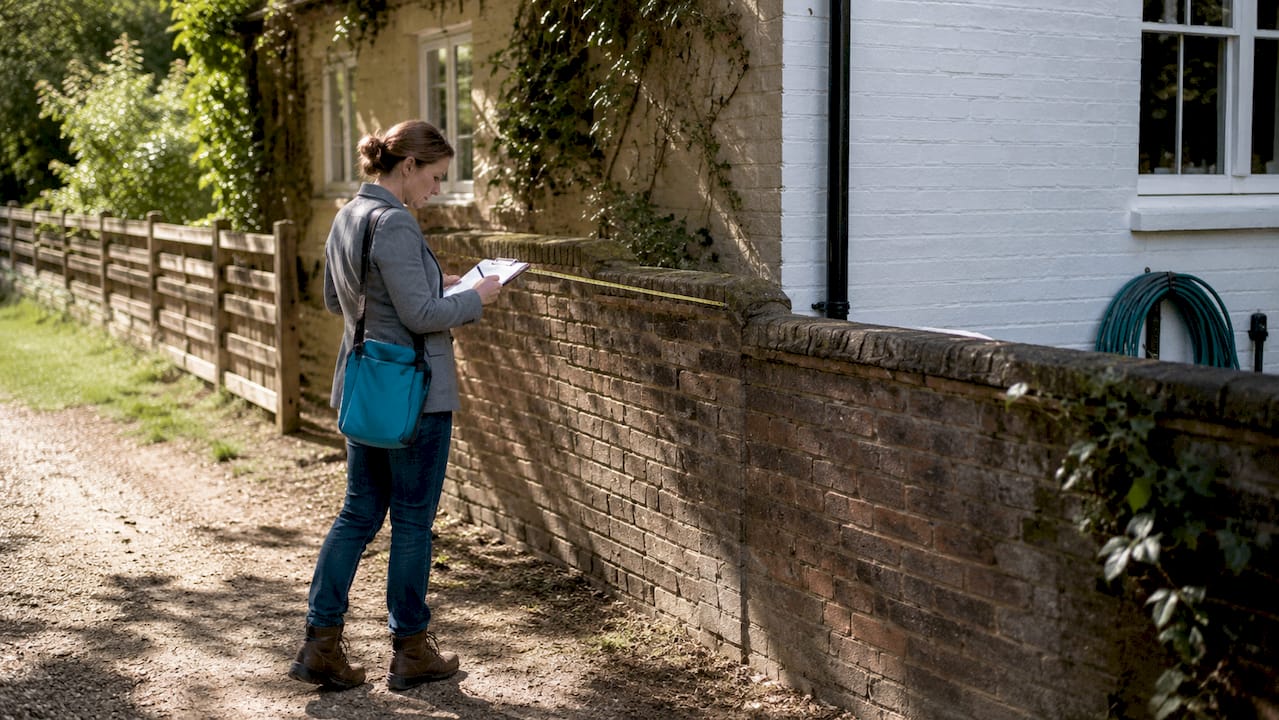
For RICS building surveyors, this market is generating a distinct pattern of instructions and negotiations. With so much stock available, buyers are commissioning surveys earlier and using the findings more assertively in price negotiations. Sellers, aware that a disappointed buyer can simply walk to the next listing, are proving noticeably more receptive to renegotiating on the back of survey reports rather than risking a withdrawn offer.
Surveyors report a rise in requests for full Level 3 building surveys on older or unusual properties, rather than buyers relying solely on a basic Level 1 condition report or lender valuation. Cash-conscious buyers, wary of both high mortgage rates and the risk of hidden repair costs, are increasingly viewing a Level 2 HomeBuyer Report or Level 3 Building Survey as essential due diligence rather than an optional extra — a sensible response to a market offering this much choice.
Frequently Asked Questions
Did UK house prices rise or fall in September 2026?
Asking prices rose 0.7% month-on-month to £367,440, the first monthly increase since May, but remain 0.8% lower than a year earlier.
Why are there so many homes for sale right now?
Homes for sale have hit a 12-year high largely because properties are taking longer to sell — agreed sales are down 9% year-on-year even though new listings fell only 3%.
Is now a good time to buy a house in the UK?
With record stock levels and slower sales, buyers have more choice and negotiating power than in recent years, though higher mortgage rates around 5.29% offset some of that advantage.
Why is London's market so much weaker than Scotland's?
Only 42% of London listings are finding a buyer compared with 91% in Scotland, reflecting London's higher prices, stretched affordability, and larger stock overhang.
Should I get a survey before buying in this market?
Yes. With abundant stock and sellers more open to negotiation, a Level 2 or Level 3 RICS survey can uncover defects that support a lower offer or repair contribution.
What did the Bank of England decide on interest rates in September 2026?
The Bank of England held its base rate at 4% at its 17 September 2026 meeting, offering stability but no immediate relief to mortgage borrowers.
Conclusion
September 2026's Rightmove data captures a market caught between relief and restraint. This is not a signal that the market has turned decisively — as Colleen Babcock rightly cautions, it is a modest recovery, not a major turning point. Buyers should use the current abundance of stock to negotiate firmly, particularly armed with a proper RICS survey. Sellers should price with discipline and stay open to renegotiation. And surveyors should expect continued strong demand for detailed inspections as this drawn-out, buyer-favourable market plays out through the rest of autumn.