The Office for Budget Responsibility now expects net additions to England's housing stock to fall to about 230,000 in 2025/26, with cumulative net additions to 2030/31 coming in 190,000 lower than its March 2026 forecast, according to figures reported by the Home Builders Federation. For anyone weighing up a new-build against an older property this autumn, that revision changes the arithmetic of choice, price and patience.
The OBR housing supply forecast, published alongside the Chancellor's Autumn Budget on 28 October 2026, is not a footnote. It tells buyers and sellers that the supply of new homes will be tighter than planners assumed only seven months earlier, and that the policies meant to fix this are, in the OBR's own words, likely to have only a marginal effect.
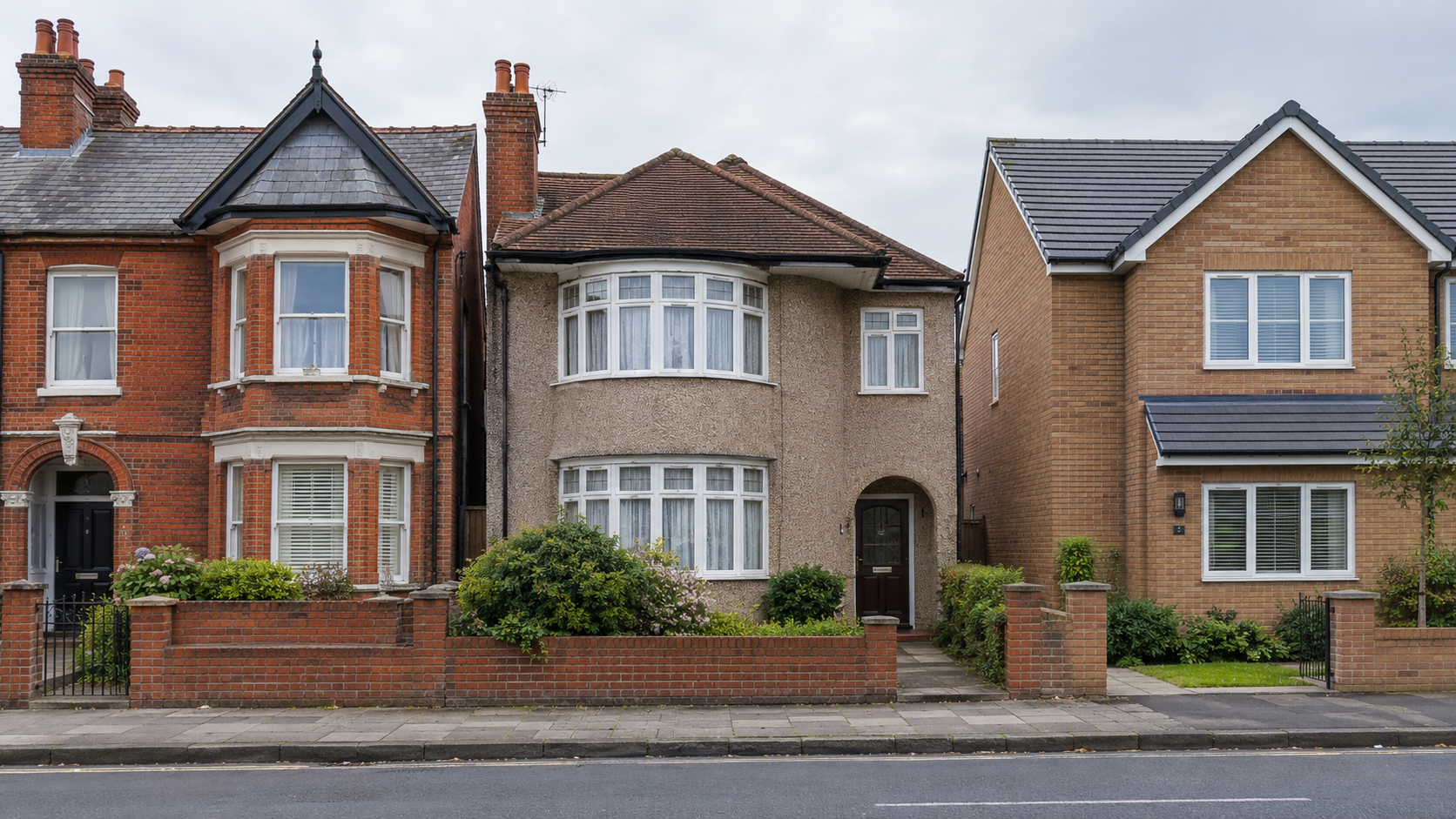
This matters whether you are choosing a show home on a new estate or a 1930s semi three streets away. Fewer new homes can mean firmer prices on new-build plots, longer waits for the development you had your eye on, and a continued case for looking seriously at the existing housing stock, where a RICS survey remains the best way to understand what you are actually buying.
Key Takeaways
- The OBR now expects 190,000 fewer cumulative net housing additions by 2030/31 than it forecast in March 2026, with net additions falling to about 230,000 in 2025/26.
- The OBR blames regulation and policy costs more than previously assumed, not just demand, and expects the new Your First Home scheme to have only a marginal supply effect.
- Planning approvals hit a new low in September 2026, according to Home Builders Federation data, and 96% of SME builders report they are struggling to invest.
- Zoopla's October 2026 data shows average UK prices at £273,100, supply up 7% and sales down 7% year-on-year, a softer market that favours buyer negotiation on older homes.
- Whatever you buy, a RICS Level 2 or Level 3 survey, or an independent new-build snagging inspection, gives you leverage and clarity before you commit.
What the OBR Housing Supply Forecast Actually Says
The OBR's Budget 2026 documents, reported by the Home Builders Federation (HBF), set out two central numbers. Net additions to the housing stock are expected to drop to roughly 230,000 in 2025/26. Over the period to 2030/31, cumulative net additions are forecast to be 190,000 lower than the OBR projected back in March 2026.
The OBR points to regulation and policy costs as a bigger drag on housebuilding than it had previously built into its models. It also makes a specific judgement on the government's flagship affordability scheme: Your First Home, it says, will have only a marginal effect on overall housing supply, because it supports demand for new-build homes rather than removing the barriers that stop builders from starting them.
HBF chief executive Neil Jefferson put it plainly: "A lack of effective demand has been one of the major barriers to increasing housing supply." In other words, builders are not short of land or ambition. They are short of buyers willing and able to commit at current prices, and short of planning decisions coming through fast enough to build on.
Planning and Builder Data Behind the Forecast
The OBR's downgrade lines up with ground-level data from HBF:
- Planning approvals fell to a new low in September 2026.
- 96% of SME housebuilders say they are struggling to invest.
- Around half of local planning authorities are missing their deadlines for discharging planning conditions, the paperwork step that allows building to actually start once permission is granted.
Each of these is a brake on supply. Together, they explain why the OBR revised its forecast downward rather than treating the shortfall as a one-off.
The Budget 2026 Housing Measures, and Their Limits
The Chancellor announced several housing measures alongside the Budget, but none directly tackles the planning and investment bottlenecks the OBR identified.
| Measure | Detail | Starts |
|---|
| Your First Home | Equity loan up to 20% on new-build homes, 2.5% deposit, £4.7bn over five years, income caps £110,000 (£140,000 in London) | Spring 2027 |
| BNG exemption | Biodiversity net gain exemption for brownfield residential sites up to 1.5 hectares | From Budget |
| Golden Brick VAT | Response on VAT treatment of land for social housing | From Budget |
| Council and affordable housing | Extra investment; Chancellor cited loss of over two million council homes since the 1980s and 170,000+ children in temporary accommodation | Ongoing |
| First Time Buyer ISA | New savings product for first-time buyers | April 2029 |
| Lifetime ISA penalty | Cut to 20% for home purchases above £450,000 | From 29 October 2026 |
| Stamp duty | No change announced | n/a |
Your First Home will not launch until spring 2027, and the OBR has already judged its supply impact as marginal. For buyers weighing a purchase now, these measures are mostly future demand support, not a quick route to more homes being built today.
What a Tighter Pipeline Means for New-Build Buyers
A shrinking pipeline tends to support new-build asking prices on the plots that do make it to market, because fewer competing developments are coming through planning. Developers facing lower approval numbers have less incentive to discount.
For buyers, that means:
- Less choice of plot and house type in some areas, particularly where SME builders have scaled back.
- Continued importance of equity-loan rules under schemes like Your First Home, which only apply to new-build homes and come with income caps.
- No reduction in the need for a snagging inspection. New-build defects, from poor insulation fitting to drainage faults, do not disappear because supply is tight. An independent snagging survey before legal completion, and again near the end of the two-year builder warranty period, remains sound practice.
- Service charge and warranty terms deserve scrutiny. NHBC or equivalent 10-year warranties cover structural defects, but day-to-day running costs on new estates, such as management fees for communal areas, should be checked against the lease or transfer documents.
What the Market Data Means for Older Homes
Zoopla's October 2026 House Price Index shows a market with more room to negotiate. Average UK prices stood at £273,100, up 0.8% year-on-year. Supply was up 7%, sales were down 7%, and it took an average of 44 days to find a buyer.
More stock chasing fewer completed sales usually hands some negotiating power to buyers. For an older property, that negotiating power works best when paired with proper evidence of condition, which is where a RICS survey does its job.
RICS Level 2 vs Level 3 Survey
| Feature | RICS Level 2 (HomeBuyer Report) | RICS Level 3 (Building Survey) |
|---|
| Best suited to | Conventional homes in reasonable condition | Older, altered, or unusual construction properties |
| Depth of inspection | Visual, non-invasive | Detailed, including roof voids and structural assessment |
| Cost guide | Lower | Higher, reflecting more surveyor time |
| Output | Condition ratings (1-3), repair summary | Full narrative report with defect analysis and repair priorities |
| Typical use case | Straightforward purchase decisions | Pre-war, listed, extended or timber-frame properties |
A chartered surveyor will advise which level suits a specific property, but as a general rule, anything built before 1930, anything extended without clear building control records, or anything showing visible cracking or damp deserves the fuller Level 3 inspection.
Decision Checklist: New-Build or Older Home
- Check whether the development you like is actually under construction, not just consented. Planning approval delays mean "coming soon" can mean a long wait.
- Confirm whether Your First Home eligibility applies to you, bearing in mind the spring 2027 start date and income caps.
- For new-build, commission an independent snagging inspection before completion and again before the warranty period ends.
- For an older home, instruct a RICS Level 2 or Level 3 survey matched to the property's age and construction.
- Use the softer resale market, 44 days average and rising supply, as a basis for a realistic, evidence-backed offer.
- Ask about service charges, ground rent, or estate management fees on new-build sites before agreeing a price.
FAQ
What did the OBR actually change in its Budget 2026 forecast?
The OBR cut its forecast for cumulative net housing additions to 2030/31 by 190,000 compared with its March 2026 projection, and now expects net additions to fall to around 230,000 in 2025/26.
Does the OBR blame weak demand or planning rules?
Both feature, but the OBR specifically pointed to regulation and policy costs weighing on housebuilding more than it previously assumed, alongside HBF's point about weak effective demand.
Will Your First Home fix the housing shortage?
The OBR expects it to have only a marginal effect on supply, since it is a demand-side scheme for new-build buyers rather than a fix for planning and investment barriers.
Is now a good time to negotiate on an older home?
Zoopla's October 2026 data shows rising supply and falling sales volumes, conditions that typically support buyer negotiation, though local markets vary.
Do I still need a survey if I am buying new-build?
Yes. A new-build warranty covers structural defects over time, but it does not replace an independent snagging inspection for finishing and installation faults before and after completion.
Conclusion
The OBR's Budget 2026 revision is a signal that new homes will be scarcer than expected through the rest of this decade, with planning delays and builder investment problems sitting behind the headline number. Budget measures aimed at buyers, from Your First Home to the Lifetime ISA change, mostly support demand rather than speed up supply.
For a practical next step, get a RICS surveyor's view before you commit to either route: a snagging inspection for new-build, or a Level 2 or Level 3 survey for an older property. The right report, matched to the right property, gives you something the forecasts cannot: a clear picture of the specific home you are about to buy.