A single number tells the story of this autumn's UK housing market: 5.59%. That is where the average two-year fixed mortgage rate landed on 1 September 2026, according to Moneyfacts data, up from just 4.83% in late February. In six months, borrowing costs on a typical fixed deal have jumped by more than three-quarters of a percentage point, driven largely by geopolitical tensions thousands of miles away.
Key Takeaways
- The average two-year fixed mortgage rate reached 5.59% on 1 September 2026, up from 4.83% in February.
- Rightmove's mortgage tracker puts typical rates at 5.09%, with the average monthly repayment around £1,717.
- Rightmove has cut its 2026 asking-price forecast to a range of 0% to -2%.
- The average UK house price stood at £272,188 in June (Land Registry), up just 0.1% month on month.
- Roughly a third of live listings have had asking prices cut by around 7%.
Why UK Mortgage Rates Are Climbing
The direct trigger is geopolitical, not domestic. Escalating US-Iran tensions rattled energy markets and swap rates through March and April, prompting lenders to reprice fixed-rate deals repeatedly. Swap rates, which underpin how banks price fixed mortgages, moved sharply as investors priced in a prolonged conflict and its inflationary knock-on effects.
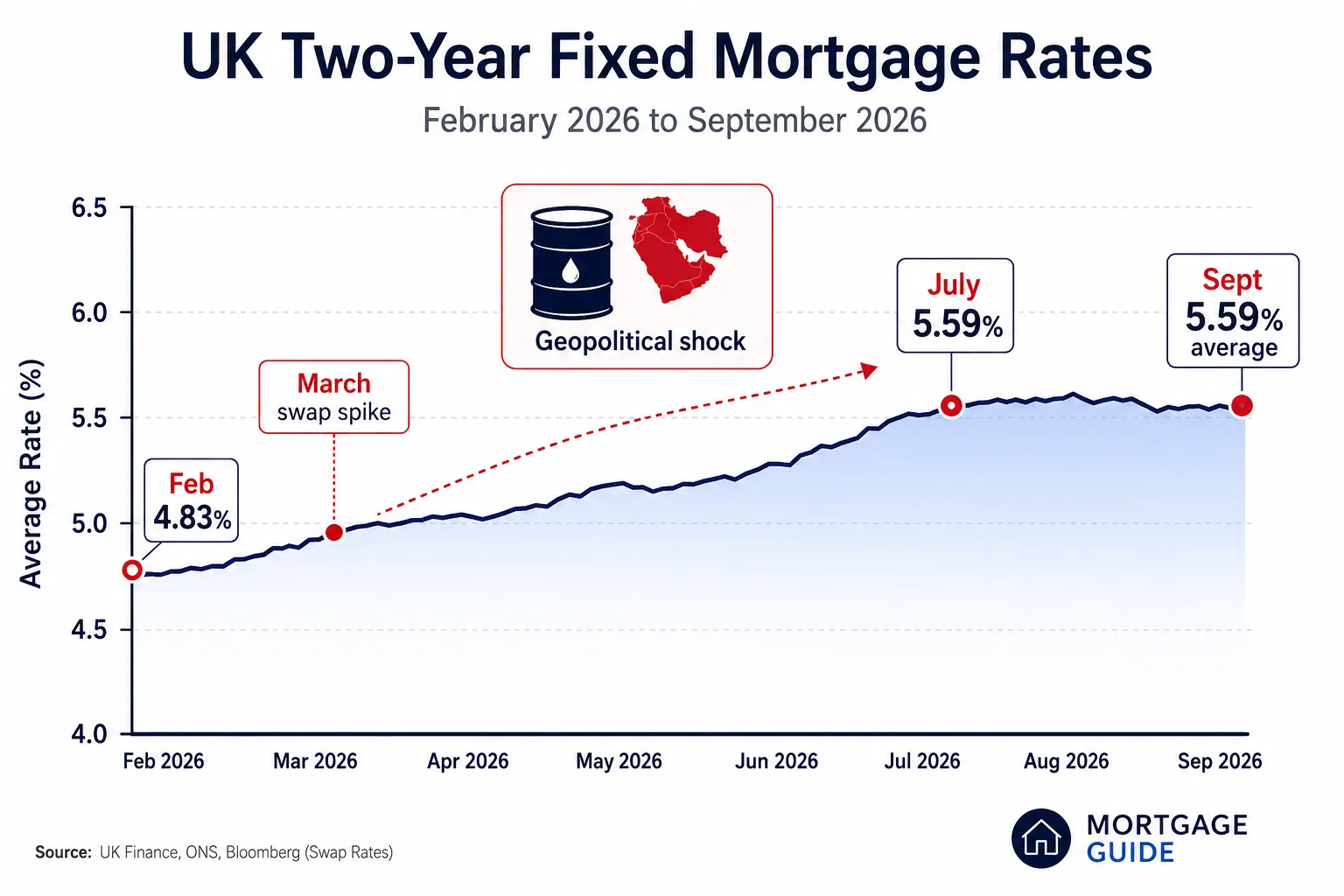
By July the average two-year fixed rate had already reached 5.59% — a level markets expected to ease, but which instead has held into September. Major lenders, including several high-street names, have repriced fixed products more than once since spring.
What 5.59% Means for Monthly Payments
The headline 5.59% is market-wide; it is not the best deal available. Best-buy two-year fixed rates remain meaningfully below it, rewarding borrowers with strong credit profiles and larger deposits who shop carefully.
| Metric | February 2026 | September 2026 |
|---|
| Average 2-year fixed rate | 4.83% | 5.59% |
| Rightmove mortgage tracker | — | 5.09% |
| Average monthly repayment | Lower | ~£1,717 |
| Average house price | Slightly lower | £272,188 (June) |
The average monthly mortgage payment of roughly £1,717 marks a noticeable increase in outgoings compared with the start of the year.
Housing Market Reaction
Higher borrowing costs are already showing up in asking prices. Rightmove has revised its 2026 full-year forecast down to a range of 0% to -2%. The average UK house price, per the June Land Registry index, was £272,188, up a marginal 0.1% month on month.
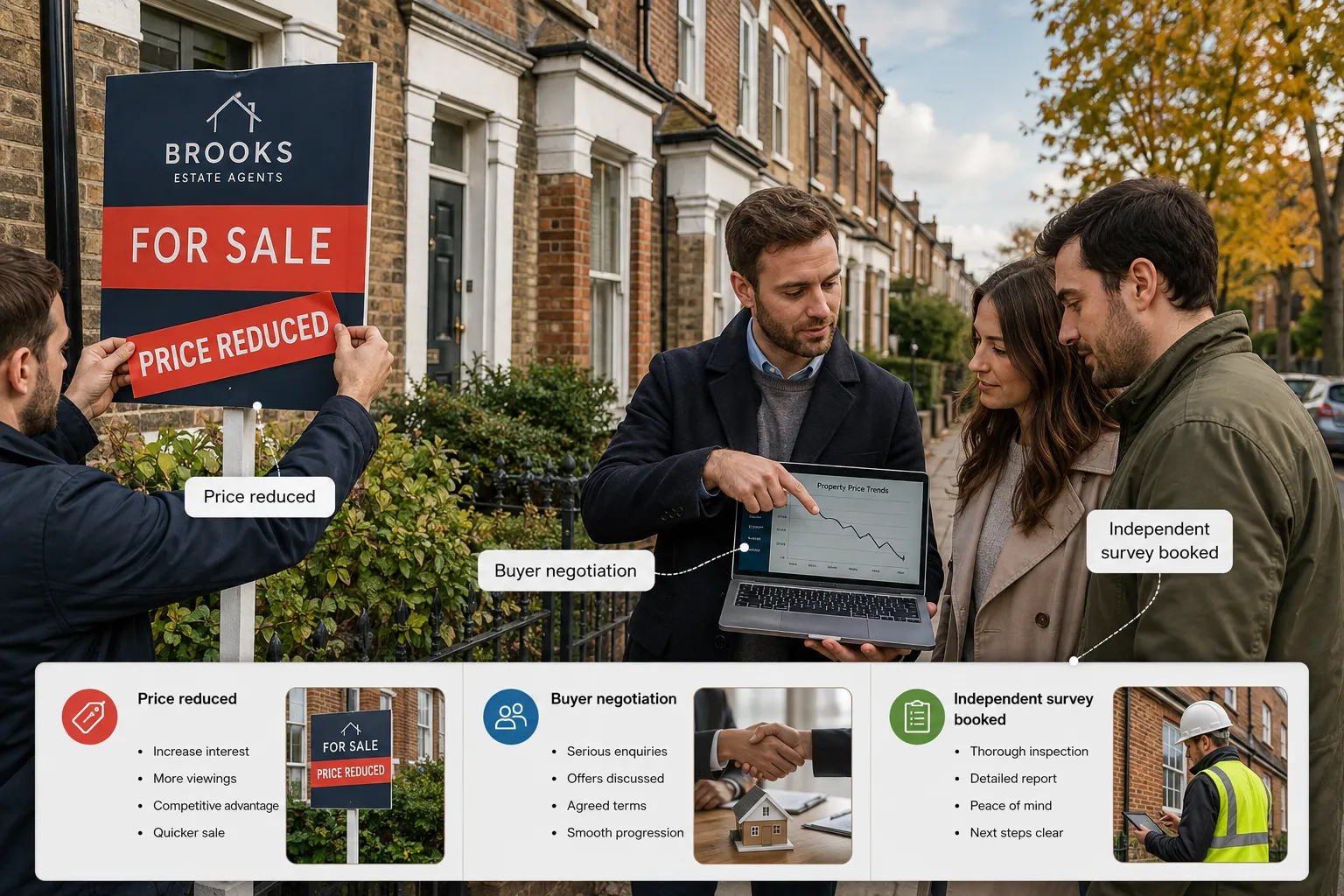
Around a third of all live listings have seen asking prices cut, with reductions averaging about 7% — a substantial discount that suggests many sellers priced too optimistically earlier in the year.
What Buyers Should Do This Month
- Get a mortgage in principle early. With rates changing frequently, locking in an agreement in principle protects against further short-term repricing.
- Compare best-buy deals, not just averages. Best-buy two-year fixes sit well below the 5.59% headline figure.
- Use price cuts as leverage. With a third of listings already reduced, buyers have room to negotiate.
- Stress-test affordability. Budget for the higher end of rate scenarios given ongoing volatility.
What Sellers Should Do This Month
With Rightmove's forecast pointing to flat or falling prices for the rest of 2026, overpricing risks a longer time on market and an eventual, larger reduction.
- Price realistically from listing day rather than testing the market high and cutting later.
- Expect more price-sensitive negotiations from buyers dealing with £1,717 average monthly payments.
- Highlight recent structural work or energy efficiency upgrades — buyers weighing higher mortgage costs are increasingly cautious about future repair bills.
Homeowners Considering Remortgage
- Start the remortgage process three to six months before the current deal ends.
- Compare like-for-like two-year and five-year fixed options — longer-term fixes offer payment certainty during ongoing geopolitical volatility.
- Speak to a broker about product transfers versus switching lenders. Switching costs and rate differences vary widely right now.
Why an Independent Building Survey Matters More in a Jittery Market
When rates and prices are moving quickly, an independent building survey becomes a critical tool rather than an optional extra. With a third of properties already reduced in price, buyers need certainty about what they are actually paying for. A RICS Level 2 or Level 3 survey helps buyers:
- Identify structural issues that could justify further price negotiation.
- Avoid overpaying on a property that looked competitively priced only because of a recent asking-price cut.
- Budget accurately for repairs at a time when mortgage payments are already stretching household finances.
Frequently Asked Questions
Why did UK mortgage rates rise so sharply this year? Escalating Middle East tensions pushed up swap rates, which lenders use to price fixed mortgages, leading to repeated repricing through spring and summer.
Is 5.59% the best rate available right now? No — it is the market-wide average two-year fixed rate. Best-buy deals remain notably lower for well-qualified borrowers.
Will house prices fall further in 2026? Rightmove's revised forecast suggests prices could move between 0% and -2% for the year.
Should I fix for two years or five years now? It depends on individual risk tolerance. Five-year fixes offer more certainty if volatility continues; two-year deals allow flexibility if rates ease.
Is now a good time to negotiate on price as a buyer? Yes — with roughly a third of listings already reduced by about 7%, buyers have more negotiating leverage than earlier in 2026.
Sources