Leasehold
Jul 16, 2026
Common Electrical Issues in Older Homes
Older homes often have unsafe electrics - deteriorating wiring, old fuse boxes, poor earthing and overloaded circuits; EICRs

Older homes often have electrical systems that struggle to meet modern safety and power demands. If your home was built before the 1980s, it may have outdated wiring, insufficient sockets, or old fuse boxes that increase risks like electrical shocks or fires. Here's what you need to know:
Solution: A professional Electrical Installation Condition Report (EICR) can identify these risks. Depending on findings, rewiring, upgrading to a modern consumer unit, or adding sockets may be necessary. Costs for rewiring a typical three-bedroom house range from £3,000 to £6,000, while replacing a consumer unit costs £600–£900.
Key takeaway: Regular inspections and updates to your electrical system can prevent hazards, improve safety, and ensure your home meets current standards.
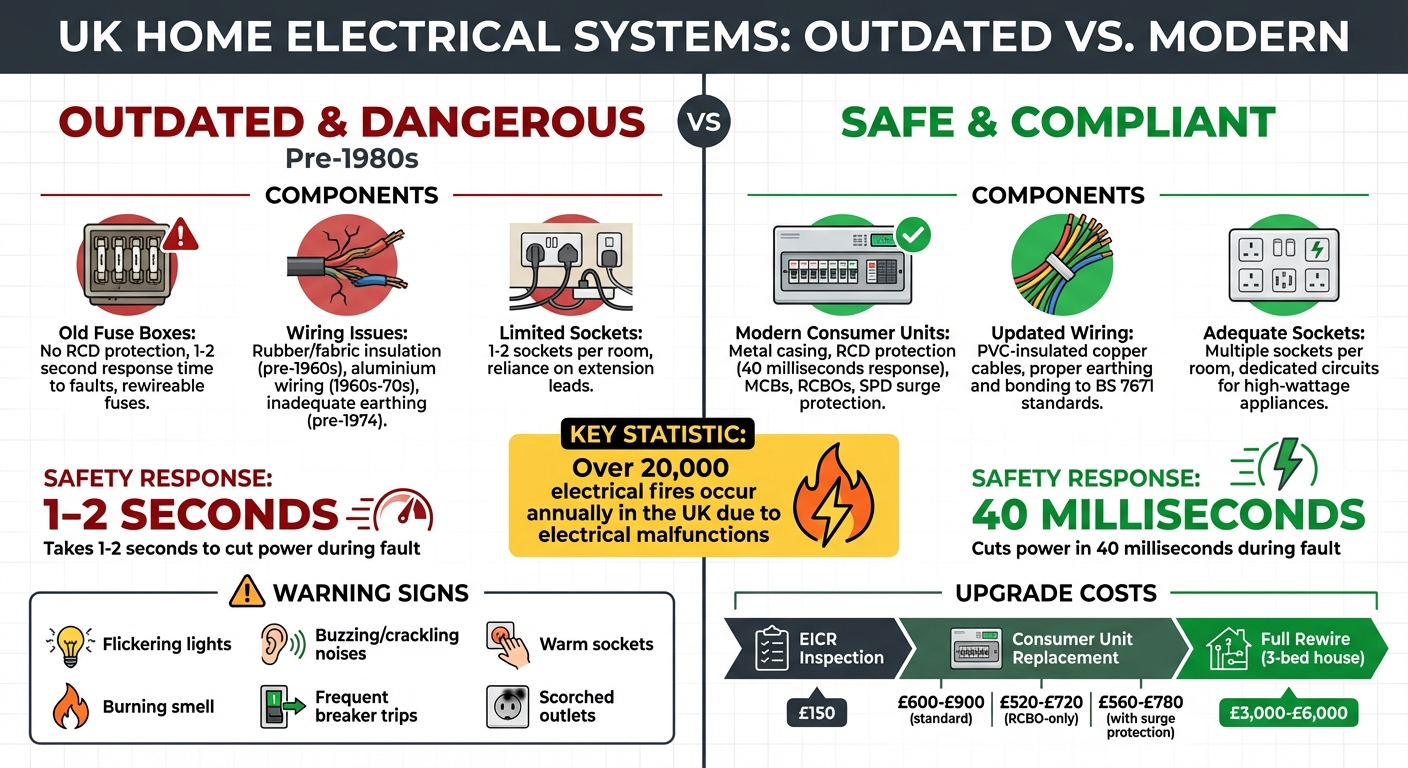
Old vs Modern Electrical Systems: Safety Features and Upgrade Costs
Old wiring isn't just a relic of the past - it can be a serious safety concern. Homes built before the 1960s often used insulation materials that are no longer reliable and now pose fire risks. For instance, black rubber sheathing tends to dry out and crumble over time, while fabric-covered wires can flake after years of use, leaving them exposed.
During the 1960s and 1970s, aluminium wiring was a popular, cost-effective alternative to copper. However, it has its flaws. Aluminium expands when heated and oxidises, which can loosen connections and create hotspots - potentially igniting nearby materials. Similarly, early PVC cables from that era may produce a sticky green substance, sometimes called "green goo." This residue not only damages electrical components but also carries health risks.
Another common issue in pre-1974 homes is inadequate earthing, which is vital for electrical safety. Even older systems, such as knob and tube wiring found in pre-1950s properties, lack grounding altogether. When modern insulation is added to these systems, the risk of fire increases. Thankfully, many of these issues come with warning signs that shouldn't be ignored.
Spotting the early signs of deteriorating wiring can prevent bigger problems down the line. For example, discoloured or scorched sockets could mean overheating, while a persistent burning smell near electrical outlets should never be dismissed. Warm sockets or switches are another red flag, often indicating that the wiring is struggling to handle its current load.
"Electricity should be silent. Buzzing, crackling, or sizzling noises behind walls or at outlets often suggest loose or damaged wiring that needs urgent attention." - Home Rewires Ltd
Other indicators include flickering or dimming lights, particularly when high-energy appliances like kettles or heaters are in use. Frequent circuit breaker trips or blown fuses are also signs of trouble. If you ever feel a small shock or tingle when touching an appliance, it could point to grounding issues that need addressing.
Fixing outdated wiring is essential for maintaining a safe home. The process often starts with an Electrical Installation Condition Report (EICR), which costs around £150 [6]. A licensed electrician will inspect your system and assign one of three codes: C1 for immediate dangers, C2 for urgent risks, and C3 for suggested improvements.
If your wiring is over 35 years old, a complete rewire might be necessary. Rewiring a standard three-bedroom semi-detached house typically costs between £3,000 and £6,000 [5]. Since the process can be invasive - requiring floorboards to be lifted and walls to be opened - it’s best to schedule it during renovations or when the property is unoccupied. Once the work is done, you’ll receive an Electrical Installation Certificate, confirming compliance with BS 7671 standards and Part P of the Building Regulations. Updating your wiring not only reduces fire risks but also ensures your electrical system operates safely and efficiently.
Older fuse boxes simply weren’t built to handle the demands of modern electrical appliances. Homes constructed before the 1960s often relied on basic systems designed for low energy usage, such as powering lights and radios. These outdated setups struggle to support today’s high-energy devices like electric showers, induction hobs, or EV chargers.
One major issue with older fuse boxes is the lack of Residual Current Device (RCD) protection. Modern RCDs are designed to cut power in just 40 milliseconds when a fault is detected[10]. This swift action can mean the difference between a minor shock and a fatal incident. By comparison, traditional rewireable fuses take one to two seconds to melt and break the circuit - a delay that can have serious consequences[12].
"In the event of a fault, it is the job of the fuse box or consumer unit to turn the power off to prevent fatal electric shock, earth fault, risk of fire and much more." – Paul Higgins, Electrician, Qualified Supervisor and Electrical Tutor[7]
Over time, older fuse boxes can develop loose connections and arcing, which may ignite surrounding materials. Brittle fuse holders further increase the risk of fire[8][10]. To make matters worse, some homeowners replace blown fuses with unsafe fixes, such as using wires with incorrect ratings or makeshift solutions. These actions bypass the fuse box’s intended safety features and can lead to serious hazards[10].
Given these risks, upgrading to a modern consumer unit is a crucial step in improving electrical safety.
Switching to a modern consumer unit eliminates many of the dangers associated with older systems. Current UK regulations (BS 7671) require consumer units to be made from non-combustible materials like metal[9]. These units are equipped with Miniature Circuit Breakers (MCBs), RCDs, and often Residual Current Breakers with Overcurrent protection (RCBOs), which protect individual circuits. Many newer installations also feature Surge Protection Devices (SPDs) to safeguard sensitive electronics from voltage spikes[7][9][11]. RCBOs have the added benefit of isolating faults to a single circuit, so a problem with one appliance won’t cut power to your entire home.
The cost of replacing a standard consumer unit typically falls between £600 and £900, excluding safety checks[7]. For RCBO-only units, prices range from £520 to £720, while units with surge protection are generally priced between £560 and £780[11]. Before upgrading, it’s wise to have a qualified electrician conduct an Electrical Installation Condition Report (EICR) to identify any underlying wiring issues. Always ensure the work is carried out by an electrician registered with a government-approved scheme, such as NICEIC or NAPIT, to guarantee compliance with Building Regulations and to receive a Building Regulations Compliance Certificate.
Many older UK homes were built with just one or two sockets per room, which falls far short of what modern lifestyles require. Decades ago, electrical systems weren't designed to handle today's demands - charging multiple devices, running dishwashers, powering home entertainment systems, or supporting electric vehicle chargers all at once. This gap between outdated infrastructure and modern needs can lead to serious safety issues, often showing up as overloaded circuits.
Overloaded circuits are a direct result of these older designs. One common sign is frequent tripping of the circuit breaker, which happens when the system shuts down to prevent overheating. You might also notice lights dimming when high-power appliances, like kettles or vacuum cleaners, are turned on. Other red flags include warm sockets, scorch marks around plugs, buzzing or crackling noises, and a burning smell similar to melting plastic. Alarmingly, in the UK, over 20,000 accidental fires each year are linked to electrical malfunctions, with overloaded circuits being a major cause [13].
To make up for the lack of sockets, many homeowners rely on extension leads and multi-plug adaptors. However, these are intended for temporary use, and daisy-chaining them - a common practice - greatly increases the risk of overheating.
"Extension cords are meant for temporary use not as a permanent solution." – Complete Connectrix Ltd [2]
Improving wiring and consumer units is just part of the solution; addressing circuit loads is equally important for safety. High-wattage appliances like electric ovens, washing machines, and EV chargers should each have their own dedicated circuit to prevent overloading. Adding extra double sockets in key areas can also significantly reduce reliance on risky extension leads. Always plug heat-producing appliances directly into wall sockets.
To identify overloaded circuits and assess whether your consumer unit needs replacing, consider obtaining an Electrical Installation Condition Report (EICR). Major electrical work must comply with Part P of the Building Regulations and should be handled by a registered electrician, such as those certified by NICEIC or NAPIT. For homes over 25 years old, a full or partial rewire might be necessary, replacing outdated wiring with modern PVC-insulated copper cables. For a standard three-bedroom house, a full rewire typically costs between £3,000 and £6,000 [14][4].
Flickering lights might seem like a minor inconvenience, but they often point to deeper electrical issues that shouldn't be ignored. In many older UK homes, these problems are frequently linked to loose connections, corroded fittings, or outdated components that aren't compatible with modern lighting systems. Such homes often rely on ageing electrical setups, and flickering lights can act as a warning sign of faults needing professional attention.
One of the most common reasons for flickering lights is loose wiring in fixtures. Over time, vibrations and general wear can weaken these connections, leading to inconsistent current flow. This irregularity causes lights to flicker or dim. If you hear buzzing or crackling sounds near switches, it could indicate electrical arcing - where the current jumps across damaged or loose connections.
"Flickering lights and dimming issues aren't just annoying - they can signal loose wiring, an overloaded circuit, or even faulty connections within your lighting circuits." – Maintracts Services Ltd [3]
Another frequent cause is voltage drops when high-demand appliances, like kettles or microwaves, are switched on. If your lights dim whenever one of these appliances starts, it's likely because they share the same circuit. Many older homes weren't designed to handle the simultaneous use of multiple devices. Additionally, flickering can occur when modern LED bulbs are paired with outdated dimmer switches, as older dimmers often fail to work properly with newer lighting technologies [15][2].
If the flickering is limited to one fixture, start by checking whether the bulb is securely fitted and compatible with the fixture. However, if the issue is more widespread, it often involves tightening connections at switches or junction boxes - tasks that should always be handled by a qualified electrician.
Replace any switches that feel warm to the touch, show signs of discolouration, or make crackling noises. Upgrading to modern switches designed for LED bulbs can resolve issues caused by outdated components [2]. If your lights dim whenever appliances are in use, it may be necessary to isolate the lighting circuits or redistribute the electrical load to prevent high-wattage devices from interfering with your lighting. For persistent issues, consider scheduling an Electrical Installation Condition Report (EICR) to identify and address potential risks [2][3].
"Electrical faults are a leading cause of house fires in the UK, with most caused by a seemingly small problem - faulty wiring, flickering lights or simply a loose connection." – James Frew [16]
Having proper earthing and bonding in place is crucial for electrical safety, yet many older homes in the UK either lack these systems or have ones that have deteriorated over time. Earthing provides a route for fault currents to safely travel into the ground, which activates circuit breakers or fuses to cut off the power. Bonding, on the other hand, connects metal components like gas, water, or oil pipes to the main earthing terminal, helping to minimise dangerous voltage differences during a fault [17]. Without these safeguards, the likelihood of electric shocks increases significantly, making it essential to update these systems in older properties.
In many older homes, earthing systems are either outdated, corroded, or improperly sized for modern electrical demands. Some properties even rely on old metal conduit systems that may no longer be connected [3]. These issues can force fault currents through people or appliances instead of safely discharging them to the ground. Another common problem is ungrounded outlets, which lack the third prong. This can turn the metal casing of faulty appliances into a live hazard, posing a serious risk of electric shock [1][2].
"Older homes may have earth installations which are under sized, have deteriorated, or rely on old metal conduit systems that have been disconnected. This is dangerous, increases the risk of shock and offer no surge protection." – Maintracts Services Ltd [3]
Signs of poor earthing include mild electric shocks when touching taps or appliances, buzzing noises from outlets, and the absence of green and yellow bonding wires on visible pipework [2]. Additionally, inadequate earthing can prevent modern safety devices like Residual Current Devices (RCDs) from functioning properly, as these devices depend on a solid earth path to detect leakage currents.
To address these risks, upgrading outdated earthing and bonding systems is essential. Compliance with BS7671 standards starts with a professional assessment by a qualified electrician. Main bonding involves connecting green and yellow conductors to all incoming metal services - such as gas, water, and oil pipes - either inside the property or at the meter box. In some cases, supplementary bonding may also be necessary, particularly in bathrooms, unless all circuits in the room are already protected by an RCD [17].
Outdated or undersized earthing cables should be replaced with properly rated ones. In situations where achieving a reliable earth connection is difficult, using double-insulated (Class II) accessories can provide an added safety measure [3]. Additionally, upgrading ungrounded two-prong outlets to modern three-pin sockets is critical for protecting appliances with metal casings [2]. For a typical three-bedroom semi-detached house, a complete rewire - including updated earthing and bonding - can cost upwards of £6,000 [4].
After examining common electrical faults, the next step in protecting your property investment is arranging a professional survey. These surveys can uncover hidden electrical issues, often concealed behind walls or inside consumer units, particularly in older homes. By hiring a chartered surveyor, you gain an early warning system to identify potential problems, helping you avoid unexpected expenses and negotiate necessary repairs before finalising a property purchase. This proactive approach ensures you can make informed decisions and address issues promptly.
During a Level 2 HomeBuyer Report or Level 3 Building Survey, chartered surveyors visually inspect accessible parts of your electrical system [4]. This includes checking the consumer unit (fuse box), light fittings, switches, and sockets for signs of wear, damage, or unsafe DIY modifications [4]. They use a standard rating system to categorise issues:
Surveyors also look for outdated wiring and potential hazards, such as scorched sockets or the absence of RCD protection [4]. It's worth noting that many homes in England have ageing electrical systems. According to the Valuation Office Agency, 46% of homes were built between 1930 and 1982, and 15% were constructed before 1900, meaning their systems may not meet modern power demands [4].
Since surveyors are not qualified electricians, their visual inspections help determine whether a specialist Electrical Installation Condition Report (EICR) is required before proceeding with the purchase [4]. As Collier Stevens explains:
"A competent surveyor will be able to draw some conclusions from a visual inspection as to the overall condition of the installation. However, you will only know what exactly is needed after a proper test (EICR) by a qualified electrician" [4].
If a survey suggests a full rewire is necessary, surveyors advise budgeting for additional costs like lifting floors, chasing walls, and redecorating.

Survey Merchant simplifies access to professional surveys by connecting property buyers and owners to a nationwide network of RICS-regulated surveyors. These experts offer impartial assessments tailored to the type of property. For example:
All surveyors on the platform carry professional indemnity insurance, ensuring reliable and independent advice.
When you arrange a survey through Survey Merchant, your surveyor will evaluate whether the electrical system complies with current safety standards, such as the requirement for metal-cased consumer units in certain locations like under-stairs cupboards [4]. If any issues are flagged during the inspection, they will recommend commissioning a specialist EICR for a thorough technical review of the wiring and earthing systems before completing the purchase [4]. These findings not only highlight potential risks but also provide solid evidence for negotiating the property price or requesting repairs from the seller. This process equips buyers with a clear plan for addressing electrical safety concerns and ensures a smoother transition into the property.
Older homes often come with electrical systems that no longer meet modern safety standards. Ageing wiring with rubber or fabric insulation, circuits struggling to handle today’s appliances, and the lack of RCD protection can all increase the risk of electrical fires or severe electric shocks. As Maintracts Services Ltd explains:
"Living in an older property doesn't mean you have to live with outdated and unsafe electrics. The key is recognising common electrical issues and taking steps to upgrade your system before problems escalate." [3]
A professional inspection, like an Electrical Installation Condition Report (EICR), can help identify these risks and provide a roadmap for necessary upgrades.
An EICR highlights hidden dangers and categorises them using the C1, C2, and C3 coding system, making it easier to prioritise repairs. Upgrading to a modern consumer unit with MCBs and RCDs, adding more sockets to reduce overloading, and ensuring proper earthing not only aligns with BS 7671 standards but also significantly improves safety. These updates do more than just protect your home - they can increase property value, maintain insurance coverage, and prepare your electrical system for modern needs, such as EV chargers and smart home devices.
There are several signs that could indicate your home's wiring is outdated or potentially unsafe. Be alert for flickering or dimming lights, circuit breakers that trip frequently, warm or discoloured sockets, or a burning smell near outlets. Older wiring materials, such as rubber, fabric, or lead-insulated cables, as well as homes still relying on a fuse box rather than a modern circuit breaker with RCD protection, are particularly concerning.
If your home is more than 30 years old, it’s wise to have a professional electrician carry out an Electrical Installation Condition Report (EICR) to evaluate the condition of your wiring. Experts suggest inspections every 10 years for owner-occupied homes, though older properties may require assessments more frequently. Other warning signs include visible wear and tear, buzzing noises, or insulation that appears to be deteriorating - all of which may point to the need for rewiring.
A professional inspection can provide reassurance by identifying any problems and ensuring your home complies with current electrical safety standards.
Upgrading to a modern fuse box, or consumer unit, can bring considerable benefits, especially for older properties. Modern consumer units come with Residual Current Devices (RCDs) and Miniature Circuit Breakers (MCBs), which offer improved protection against electrical faults like shocks, overheating, and even fires. These devices work by automatically cutting off power as soon as a fault is detected, helping to prevent accidents.
Another advantage is that a new consumer unit is better equipped to handle the demands of today’s appliances and gadgets, which older systems may struggle to support. This upgrade not only boosts safety but can also improve energy efficiency. Plus, having an updated, compliant unit can make your property more appealing to potential buyers, as safety and adherence to modern standards are often key considerations.
For long-term safety and peace of mind, it's worth having a professional inspect your system and carry out the upgrade if needed.
It’s usually advised to schedule an Electrical Installation Condition Report (EICR) every 10 years for homes you live in. For rental properties, an EICR should be carried out at least every 5 years or whenever there’s a new tenant.
These inspections are crucial for ensuring your property’s electrical system is safe and meets current regulations. They help to spot potential hazards early, preventing them from turning into major problems. This is especially important in older properties, where ageing wiring or general wear and tear could present safety risks.
Survey Merchant provides vetted RICS surveyors across 100+ UK locations at fixed fees:
→ Level 2 Home Survey (HomeBuyer Report)
→ Level 3 Building Survey (full structural survey)
→ RICS Red Book property valuations
→ Party wall surveyors — notices, awards & schedules of condition
→ Expert witness surveyors — CPR Part 35 reports for property disputes