Building Surveying
Jul 16, 2026
Why you need a surveyor: safeguard your property purchase
Discover why you need a surveyor to protect your property purchase. Avoid costly pitfalls and make informed decisions with our expert guide!

Nearly one in three property sales in England and Wales falls through before completion, and survey issues drive 15-20% of those collapses, leaving buyers out of pocket by £750 to £2,500 or more in wasted legal fees alone. That figure does not include the emotional toll, the months lost, or the cost of discovering a serious structural defect after you have already moved in. This guide explains precisely what a surveyor does, the very real risks of skipping one, how to choose the right survey for your property, and what the latest industry changes mean for your purchase.
| Point | Details |
|---|---|
| Surveys save money | A qualified surveyor helps uncover hidden property faults and avoid costly surprises. |
| Choose the right survey | Survey type matters—older or unusual homes often require a more in-depth assessment. |
| Modern standards protect buyers | The 2026 RICS standards offer clearer insights, lower fall-through risk, and better buyer protection. |
| Skipping surveys risks loss | Many failed sales and expensive mistakes are traced to missing or neglected surveys. |
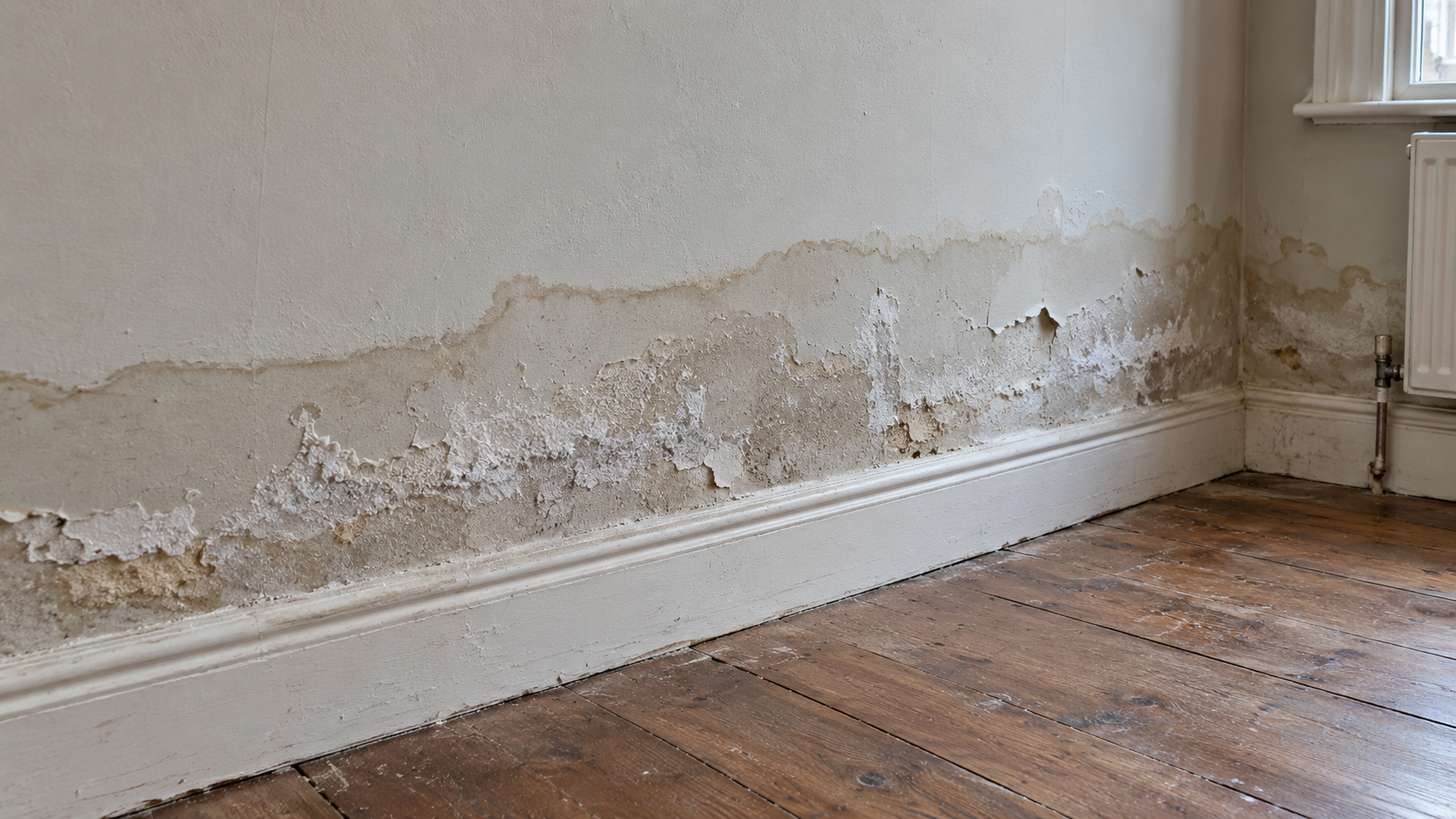
A surveyor is a trained professional who assesses the physical condition of a property before you commit to buying it. Their job is not simply to confirm there are no problems; it is to give you an accurate, impartial picture of exactly what you are buying, down to the condition of the roof structure, the state of the drainage, and the presence of any damp or movement.
Surveyors produce a detailed written report that rates the condition of every significant element of the building. This report becomes one of the most important documents in your transaction, because it either confirms your confidence or reveals issues that could cost you tens of thousands of pounds in repairs.
Here is what a surveyor typically assesses during an inspection:
“A property survey is not an optional extra. It is arguably the most important document you will receive during a purchase, providing negotiating leverage before exchange and protecting you from misrepresenting the property’s condition to your insurer or lender.”
The risks of skipping surveys are often underestimated, particularly by first-time buyers who assume that a mortgage valuation provides the same protection. It does not. A mortgage valuation is conducted for the lender’s benefit, not yours, and it may involve little more than a drive-past in some circumstances. Understanding how survey results impact a transaction, including price renegotiations, repair requests, and decisions to withdraw, is essential before you reach exchange.
Some buyers skip surveys on new builds or lower-value homes, reasoning that the cost is not worth it. However, surveys provide negotiating leverage that regularly saves buyers far more than the survey fee, and construction defects in new builds are more common than the industry would like to admit.
Skipping a survey to save a few hundred pounds is one of the most common and costly mistakes buyers make. The financial exposure can be severe, and the stress that follows discovering a major defect post-completion is considerable.

The numbers speak for themselves. Survey-related fall-throughs account for 15 to 20 percent of the roughly 30 to 35 percent of sales that collapse in England and Wales, with each failed transaction costing buyers between £750 and £2,500 in wasted solicitor fees, mortgage arrangement fees, and survey costs. When a sale collapses after exchange of contracts, buyers can lose their deposit entirely.
The hidden repair costs are often the bigger shock. Consider these scenarios:
Pro Tip: Always instruct your surveyor before you pay for a structural engineer’s report, a specialist timber and damp survey, or any other follow-up inspection. The surveyor’s report tells you which specialist reports are actually needed, saving you money and time.
Calculating survey costs versus the likely cost of undetected defects almost always shows a clear return on the investment. And when you review what problems are commonly found in building surveys, the breadth of potential issues reinforces why professional inspection is not optional for any serious buyer.
Not all surveys are the same, and choosing the wrong level of inspection for your property is almost as risky as skipping one altogether. The RICS has standardised the main survey types to make selection clearer.
| Survey type | Best suited to | Typical scope |
|---|---|---|
| Level 1 (Condition Report) | Newer, standard construction; low-risk transactions | Basic condition ratings; no advice or valuation |
| Level 2 (HomeBuyer Report) | Conventional properties in reasonable condition | Condition ratings, defect notes, brief advice, optional valuation |
| Level 3 (Building Survey) | Older, unusual, or high-risk properties | Full inspection, detailed advice, costings guidance |
| Snagging survey | New build homes pre-completion or shortly after | Defect checklist; developer handover quality control |
| Specialist surveys | Any property with specific risk factors | CCTV drain survey, EICR electrical inspection, subsidence investigation |
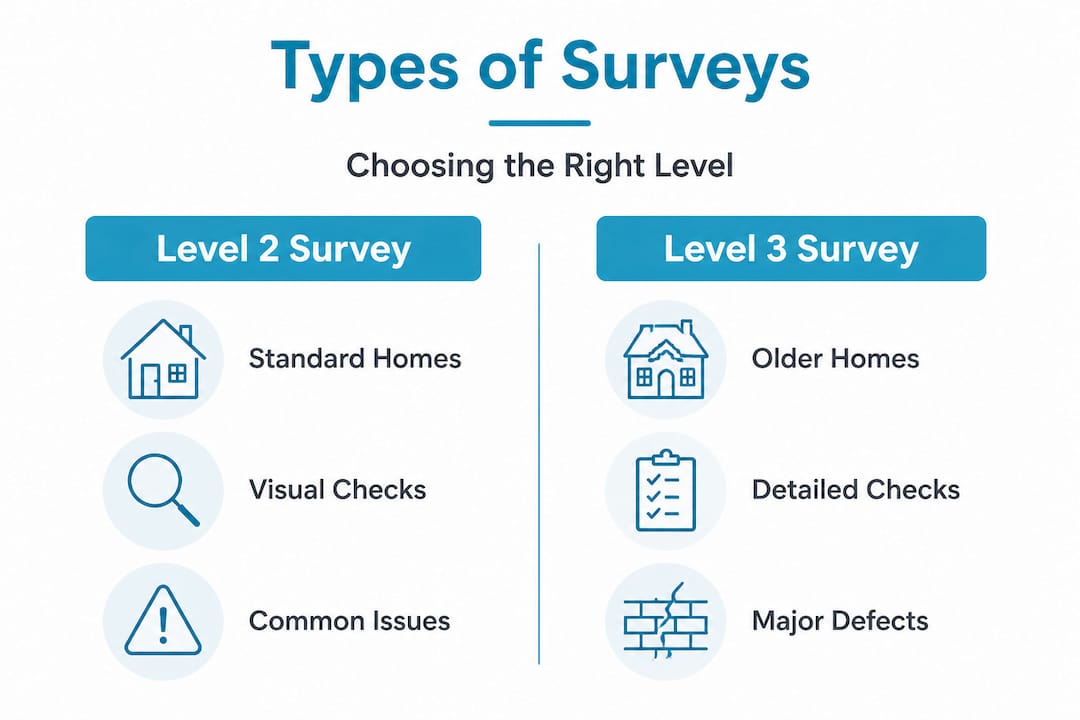
Understanding the difference between Level 2 and Level 3 surveys is particularly important for buyers of Victorian, Edwardian, or inter-war properties, where construction methods and materials present risk profiles that a standard HomeBuyer Report may not fully capture.
Level 3 is specifically recommended for older and period properties, non-standard construction, and properties in high-risk areas including flood zones or those subject to the Building Safety Act 2022. Climate-related risks, including subsidence from soil shrinkage in dry summers, are increasingly flagged in Level 3 reports for properties in southern England.
Key situations where a specialist follow-up is strongly advisable alongside your RICS survey:
For new build purchases, a snagging survey is strongly advisable before you legally complete or in the first two years. Developers often underestimate or overlook finish quality and minor defects, and having a professional snagging report gives you written evidence to pursue remediation under the new build warranty.
The quality of surveying practice in the UK is regulated and continually improving. Understanding where the standards come from, and what has recently changed, helps you know what to expect from a qualified surveyor.
The Royal Institution of Chartered Surveyors (RICS) sets the framework for how surveys are conducted and reported. Their standards govern everything from what must be inspected to how risks are communicated, and any surveyor carrying out a formal property survey should be working within this framework.
| Standard feature | Previous approach | 2026 RICS 2nd edition update |
|---|---|---|
| Energy and climate reporting | Limited mention | Significantly enhanced energy performance and climate risk disclosure |
| Building safety | Basic compliance notes | Explicit focus on Building Safety Act 2022 requirements |
| Technology use | Largely manual reporting | AI integration and digital tools for clearer, faster outputs |
| Upfront information | Varied by surveyor | Standardised upfront data to reduce fall-throughs |
| Buyer communication | Technical language | Plain-language summaries for non-specialist readers |
The RICS 2026 Home Survey Standard represents the most significant update to how surveys are structured in many years. The second edition enhances reporting on energy performance, climate change risks such as flooding and overheating, and building safety compliance, areas that have become increasingly important to buyers, lenders, and insurers alike.
Pro Tip: When booking a survey, ask your surveyor whether they are working under the current RICS Home Survey Standard. This confirms you are receiving a report that meets the latest professional and legal expectations, not an outdated template.
Technology integration is particularly significant for buyers. AI-assisted survey tools mean that 2026 RICS standard updates are enabling surveyors to cross-reference data on flood risk, ground conditions, and local planning history more efficiently than ever before. The result is a more thorough, faster report with clearer explanations of risk ratings. Using a survey checklist before your appointment helps you ask the right questions and ensure every element relevant to your property is covered.
Here is an uncomfortable truth: many experienced property buyers, investors, and even some professionals still occasionally skip surveys on properties they feel confident about. They have viewed the house three times, they know the area well, they trust their gut. And sometimes it works out. But the times it does not work out tend to be catastrophic.
The argument for skipping a survey on a cheaper property is particularly seductive. If the property is valued at £150,000 and a Level 3 survey costs £800, it feels like a significant proportional spend. But the logic breaks down the moment you consider that a £150,000 property can still have a £25,000 damp and timber problem hidden behind period features, or drainage that will fail within two years.
Some buyers skip surveys on new builds on the assumption that a freshly built property must be defect-free. This is a well-documented misconception. UK construction is carried out under considerable time and cost pressure, and snagging lists of 50 to 100 items are not unusual on new developments. Without a professional snagging survey, buyers often only discover these issues after the developer has become less responsive to warranty claims.
We are also in an era of increased regulatory complexity. The Building Safety Act 2022, changes to permitted development rights, and growing lender scrutiny around energy performance certificates mean that surveying is not simply about bricks and mortar condition. It is about understanding how survey results change decisions in a transaction, including whether a property is mortgageable, insurable, and legally compliant.
The professional surveyor brings trained eyes, regulatory knowledge, and impartiality. Your estate agent, no matter how helpful they appear, is legally working for the seller. Your solicitor handles the legal title, not the physical condition. Only your surveyor is independently working in your interest to assess what the building is actually worth and what it is actually going to cost you to own.
Understanding the importance of a professional survey is the first step. Acting on that knowledge before you exchange contracts is what protects your investment.

At Survey Merchant, we connect you with qualified, impartial surveyors across the UK, matched to your property type, location, and specific requirements. Whether you need a full building survey for an older or high-risk property, a commercial property survey for a business purchase, or expert property valuations for mortgage, probate, or dispute purposes, our panel of professionals delivers the thorough, reliable assessments you need. Every property transaction is different. Make sure yours is backed by the right expertise from the outset.
While not legally required, most lenders and experts strongly recommend using a surveyor for every purchase to avoid hidden defects and financial surprises that emerge after completion.
A Level 2 survey is a standard condition report for typical homes, while Level 3 is recommended for older, unusual, or high-risk properties that need a more detailed and thorough structural assessment.
A survey can reveal defects that give you legitimate grounds to renegotiate the agreed price or withdraw before exchange; survey-related fall-throughs account for a significant proportion of the 30 to 35 percent of UK sales that collapse annually.
Qualified RICS surveyors are expected to comply with current standards, and the 2026 RICS 2nd edition introduces enhanced energy, climate, and building safety reporting alongside AI-assisted tools for more accurate and accessible survey outputs.
Yes, a snagging survey is strongly advisable because new builds require specialist inspection to identify construction defects before your developer’s warranty response period becomes more difficult to enforce.
Survey Merchant provides vetted RICS surveyors across 100+ UK locations at fixed fees:
→ Level 2 Home Survey (HomeBuyer Report)
→ Level 3 Building Survey (full structural survey)
→ RICS Red Book property valuations
→ Party wall surveyors — notices, awards & schedules of condition
→ Expert witness surveyors — CPR Part 35 reports for property disputes