Building Surveying
Jul 22, 2026
Top surveyor questions UK buyers should ask first
Discover the top surveyor questions UK buyers must ask to uncover hidden property issues and avoid costly mistakes. Buy with confidence!

Knowing which questions to ask a surveyor is often the difference between buying with confidence and discovering a £20,000 problem after you’ve exchanged contracts. Most buyers focus entirely on finding a property they love, then treat the survey as a formality rather than a powerful investigative tool. The result? Missed defects, poorly understood reports, and no leverage at the negotiation table. This guide brings together the most important questions to ask, explains what the answers reveal, and helps you get genuine value from the surveying process.
PointDetailsAsk critical surveyor questionsCover qualifications, services, and reporting approach to protect your interests.Match survey to property risksSelect the right survey level based on your property’s age, type, and suspected issues.Budget for common repairsDamp, roof, and subsidence dominate survey findings and can mean significant repairs.Prioritise expert interpretationThe best value comes from discussing findings directly with your surveyor.
With a clear sense of why the right questions matter, let’s break down which questions reveal the most about both your property and the surveyor’s expertise.
Asking the right questions to ask a surveyor before you commission a survey is not about catching anyone out. It’s about understanding exactly what you’re paying for and ensuring the professional you hire has the skills, local knowledge, and scope to protect your investment properly.
Here are the essential questions every buyer and property owner should put to their surveyor:
Top questions property buyers ask surveyors include qualifications, services offered, costs, inspection scope covering damp, subsidence, roof, and services, valuation methodology, repair needs, local issues, insulation, and specialist referrals.
Pro Tip: Ask the surveyor how many properties of this type and age they’ve surveyed in the past six months. Experience with Victorian terraces is very different from experience with 1970s concrete-framed buildings. A specific answer gives you far more confidence than a general claim of expertise.
Once you’ve started asking the right questions, it’s just as important to understand what each type of survey can and can’t deliver.
RICS surveys are structured around three levels, each with a different depth of inspection and a different price point. Choosing the wrong level is one of the most common mistakes buyers make. Understanding the difference helps you match the survey to the property’s age, construction type, and your own risk appetite.
Survey levelFormal nameBest suited forValuation includedLevel 1Condition reportNew builds, modern homes in good conditionNoLevel 2Homebuyer reportStandard construction, reasonably maintainedOptionalLevel 3Building surveyOlder, altered, or non-standard propertiesOptional
Level 1 is the most basic. It’s a visual overview and rarely appropriate for properties built before the 1990s. Level 2 is the default choice for most buyers purchasing a modern, well-maintained property of standard construction. It provides condition ratings for each element of the building and flags items needing attention.
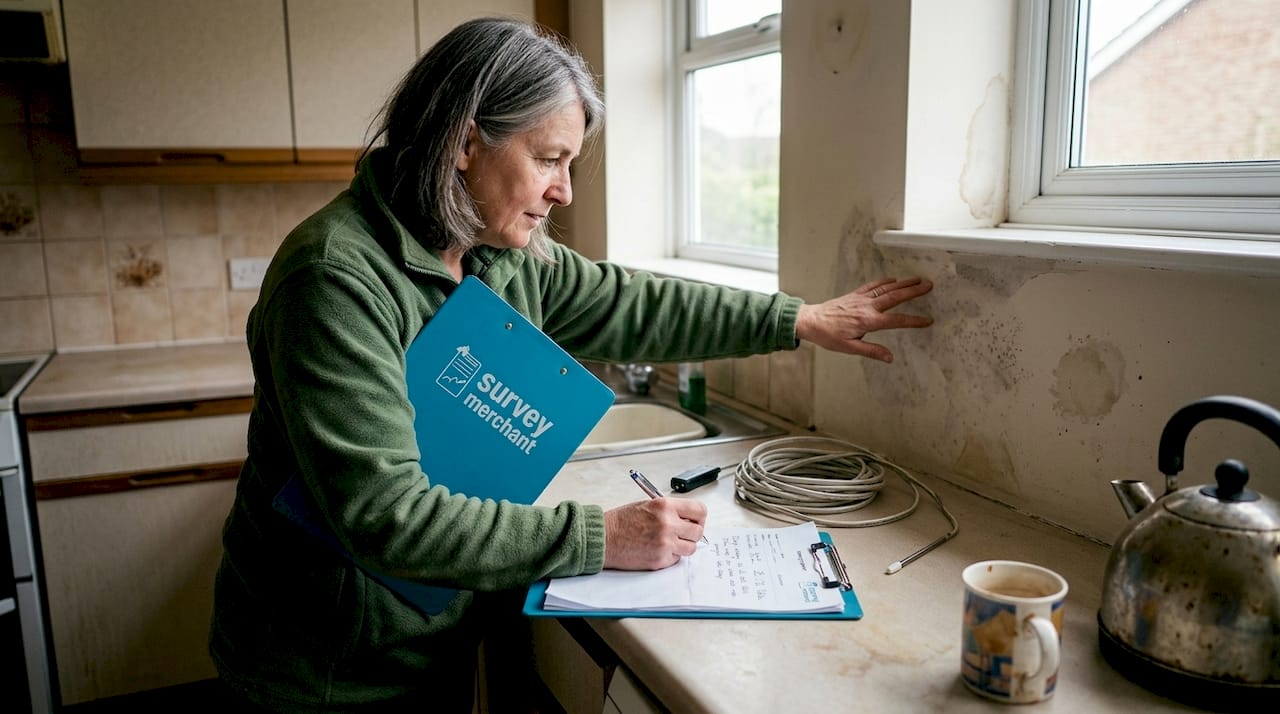
Level 3 is the most thorough and is strongly recommended for anything pre-war, significantly extended, or of unusual construction. It provides detailed commentary on defects, their likely causes, and recommended remedies. You can find a useful breakdown of what these reports include in this guide to property condition surveys.
The RICS traffic light system runs across all levels and is worth understanding before you read any report. Green (1) means good condition, amber (2) means defects are present that need attention but are not urgent, and red (3) means urgent or serious defects requiring immediate action. Crucially, surveyors carry out a visual inspection of accessible areas only. They do not lift floorboards, test electrical circuits, or carry out invasive checks.
“Surveyors inspect only what is visible and accessible at the time of survey. Hidden defects beneath floors, in wall cavities, or behind fixed fittings may not be identified without specialist investigation.”
This means a Level 3 survey is thorough but not infallible. If a surveyor flags something they cannot fully inspect, take that seriously and follow up with a specialist before exchanging contracts.
A clear overview of what surveyors actually check during an inspection is available in this article on types of survey reports, which walks through each element in plain language.
You know the survey type and asked the key questions. But what if the report brings up defects? Here’s what to expect and how to handle it.
Surveys regularly flag issues that buyers were completely unaware of. Knowing in advance which defects come up most often, what they cost to fix, and how to respond puts you in a far stronger position than simply panicking when the report lands in your inbox.
The most common survey findings and their approximate repair costs are:
The key principle to understand is that a survey finding is not a deal-breaker. It is information. Understanding the costly risks in property surveys allows you to request a reduction in the asking price, ask the vendor to remedy the defect before completion, or simply budget accordingly.
Pro Tip: If a surveyor flags damp, ask whether they recommend an independent damp specialist before accepting any treatment quotes from a damp-proofing company. Damp specialists have a commercial incentive to diagnose rising damp even when the issue is actually condensation, which is far less expensive to resolve.
The impact of survey results on price negotiations is often underestimated. A well-evidenced defect list from a qualified surveyor gives you a legitimate basis for renegotiating the purchase price, and most vendors would rather adjust the price than risk the sale collapsing entirely.
Understanding likely survey findings is only half the equation. The right surveyor will make sense of the details and protect your interests throughout the process.
Choosing a surveyor based purely on price is a false economy. A slightly cheaper fee can cost you tens of thousands if the survey misses something significant, or if the report is so vague that you can’t use it to negotiate effectively. Here’s how to make a genuinely good choice:
Pro Tip: Ask the surveyor directly how they handle situations where they find something outside their expertise. A surveyor who says “I would note it and recommend a specialist” is being honest and professional. One who implies they can assess everything without specialist input is either overconfident or cutting corners.
There is a tendency among buyers to treat the survey as a formality rather than a conversation. The report arrives, they skim it, and unless something is flagged red they assume all is well. This is a missed opportunity that surveyors see repeatedly.
The single most valuable thing you can do after receiving your survey report is to call the surveyor and talk through it. Not email. Call. Ask them to tell you, in plain language, what they were most concerned about. Ask whether they would buy the property themselves if they were in your position. Ask which amber items are close to becoming red. These questions extract the genuine professional judgement that rarely makes it into written reports, which are often worded conservatively for legal reasons.
Many buyers also skip asking about small or seemingly minor details. A damp patch in a corner can indicate a slow roof leak that’s been present for years. A slightly sloping floor might be entirely normal settlement or the early sign of something more serious. Only a surveyor who is willing to go beyond the standard assessment will give you that distinction.
We also feel strongly that buyers should challenge generic answers. If a surveyor rates something amber and you ask why, a vague answer like “it just needs monitoring” is not acceptable. A good surveyor will tell you specifically what to monitor, over what period, and what change would trigger the need for action. The survey results and decisions you make are only as good as the quality of information you extract from the process.
Don’t treat your surveyor as a box-ticking service. Use them as a local property expert whose insight you’re renting for a few hundred pounds. That reframing alone can save you significant money and stress.
If you want to put these expert tips into action, Survey Merchant makes it straightforward to get started.

Survey Merchant works exclusively with RICS-registered surveyors, so every professional you’re connected with meets the qualification standards that matter most. Whether you need a detailed inspection through our full building surveys service, an independent assessment through our RICS valuation services, or specialist support from our party wall surveyors, the platform makes it easy to find the right professional for your specific situation. You can compare services, understand what each covers, and move forward with confidence knowing your surveyor has been vetted for both qualifications and relevant local experience.
Ask about their RICS qualifications and local experience, as RICS-qualified surveyors with local knowledge are best placed to spot region-specific risks such as flood exposure or subsidence from clay soils.
Repairs vary significantly: damp costs £200 to £5,000+, roof defects £200 to £15,000+, and subsidence can reach £50,000 or more depending on severity.
Surveyors visually inspect accessible areas of electrics and plumbing but do not carry out invasive tests or checks, so a specialist electrician or plumber may be needed for a full picture.
A red (3) rating indicates an urgent and serious defect that requires immediate professional attention, and you should not proceed with a purchase without understanding the full scope and cost of the required remedy.
Most buyers start with Level 2, but you should upgrade to Level 3 for properties built before 1900, those with significant alterations, or any home where you have concerns about structural condition or non-standard construction.
Survey Merchant provides vetted RICS surveyors across 100+ UK locations at fixed fees:
→ Level 2 Home Survey (HomeBuyer Report)
→ Level 3 Building Survey (full structural survey)
→ RICS Red Book property valuations
→ Party wall surveyors — notices, awards & schedules of condition
→ Expert witness surveyors — CPR Part 35 reports for property disputes