Building Surveying
Jul 22, 2026
Level 2 vs Level 3 surveys: what property buyers must know
Discover the key difference between level 2 and level 3 survey options. Make informed property decisions and protect your investment effectively.

Many buyers assume that booking any property survey will give them adequate protection before exchanging contracts. That assumption is dangerously wrong. Choosing between a Level 2 and a Level 3 survey is not a minor administrative detail. It is a decision that directly shapes how much you know about a property’s condition, how much financial risk you carry into ownership, and how confidently you can negotiate the purchase price. This guide cuts through the confusion, explains exactly what each survey level delivers, and helps you match the right survey to your specific property and circumstances.
| Point | Details |
|---|---|
| Survey depth varies | Level 2 provides a general overview, while Level 3 offers comprehensive analysis for complex properties. |
| Choose survey by property type | Select the survey level based on your property’s age, condition, and any alterations. |
| Value vs. cost | Level 3 surveys cost more but can reveal issues that protect your investment. |
| Survey findings aid negotiation | Thorough surveys can help buyers negotiate repairs or reduce the property price. |
Before comparing the two, it helps to understand precisely what each survey involves and why the RICS (Royal Institution of Chartered Surveyors) framework categorises them separately.
A Level 2 survey, commonly known as a HomeBuyer Report, is designed for properties that are conventional in construction, reasonably modern, and in broadly acceptable condition. The surveyor inspects accessible and visible areas, assesses the general condition using a traffic light rating system, and flags issues that require attention. It is a structured, standardised report that gives buyers a reliable snapshot of surface-level concerns without probing deep into the building’s structure.
A Level 3 survey, often called a Full Building Survey or Full Structural Survey, is an altogether different undertaking. The surveyor examines the property far more thoroughly, investigates hidden areas where access is possible, assesses structural integrity, and produces a detailed narrative report explaining not just what they found but why it matters and what action is needed. As building survey basics confirm, this level of inspection is tailored to properties with greater complexity or risk.
Understanding the difference between Level 2 and Level 3 surveys is not just academic. As the framework makes clear, Level 2 surveys provide a general overview, while Level 3 surveys offer in-depth analysis that covers construction methods, materials, and the likely progression of any defects over time.
Level 2 survey is generally recommended for:
Level 3 survey is generally recommended for:
Pro Tip: Resist the temptation to choose based on cost alone. Matching the survey level to the property’s age and condition ensures you only pay for what you need, and never less than what you need.
With definitions in mind, it is vital to see how these surveys differ in practice. The contrast goes well beyond length of report or surveyor time on site. It shapes the quality of information you take into one of the largest financial decisions of your life.
| Feature | Level 2 survey | Level 3 survey |
|---|---|---|
| Scope of inspection | Visible and accessible areas | Accessible areas plus concealed spaces where possible |
| Depth of analysis | Surface condition assessment | Structural and material analysis |
| Report format | Standardised traffic light ratings | Detailed narrative with technical explanation |
| Defect investigation | Flags visible defects | Investigates causes and likely progression |
| Property suitability | Modern, standard properties | Older, altered, or complex properties |
| Typical report length | 20 to 40 pages | 40 to 100+ pages |
| Negotiation value | Moderate | High |
This survey comparison guide demonstrates just how differently the two reports function in practice. A Level 2 report will tell you that a crack exists in a wall. A Level 3 report will tell you whether that crack indicates thermal movement, structural settlement, or something far more serious requiring immediate engineering attention.
“A Level 3 survey is essential for properties with obvious defects or complex histories.”
The consequences of choosing the wrong level are measurable and often costly. Buyers who commission a Level 2 survey on a Victorian terrace, for example, may receive a clean or amber-rated report on visible surfaces while entirely missing failing lintels, original cast-iron drainage, or poorly executed loft conversions hidden behind plasterboard. These are not hypothetical risks. They are patterns that experienced surveyors encounter regularly.
The Level 2 vs Level 3 survey guidance outlines a straightforward way to think about these scenarios:
Choosing the wrong level does not just leave gaps in your knowledge. It can strip away your negotiating position and leave you legally without recourse once contracts are exchanged.
Understanding the differences is helpful, but making the right choice depends on your property’s unique context. The property’s age, construction type, visible condition, and your own risk tolerance all feed into that decision.
Choose a Level 2 survey when:
Choose a Level 3 survey when:
As the guidance on Level 2 survey details confirms, Level 2 is suitable for modern, conventional homes, while Level 3 is advised for older or altered properties where the risks are proportionally greater.
The risks of getting this wrong are not trivial. A buyer who commissions a Level 2 on an Edwardian property may exchange contracts and then discover that the chimney stacks are structurally unsound, the original floorboards conceal significant rot, or the rear addition lacks adequate foundations. Repair costs for these issues routinely run into tens of thousands of pounds.
When a Level 3 survey is carried out, surveyors follow a far more nuanced process. The Level 3 survey process involves lifting inspection covers, accessing roof voids where safe, examining exposed timbers, assessing drainage, and probing walls for damp using specialist equipment. The surveyor records not just what they see but interprets the building’s full history through its materials and construction methods. This is the detail that gives you genuine protection. The Level 3 survey guide explains this process further for buyers who want a complete picture before committing.
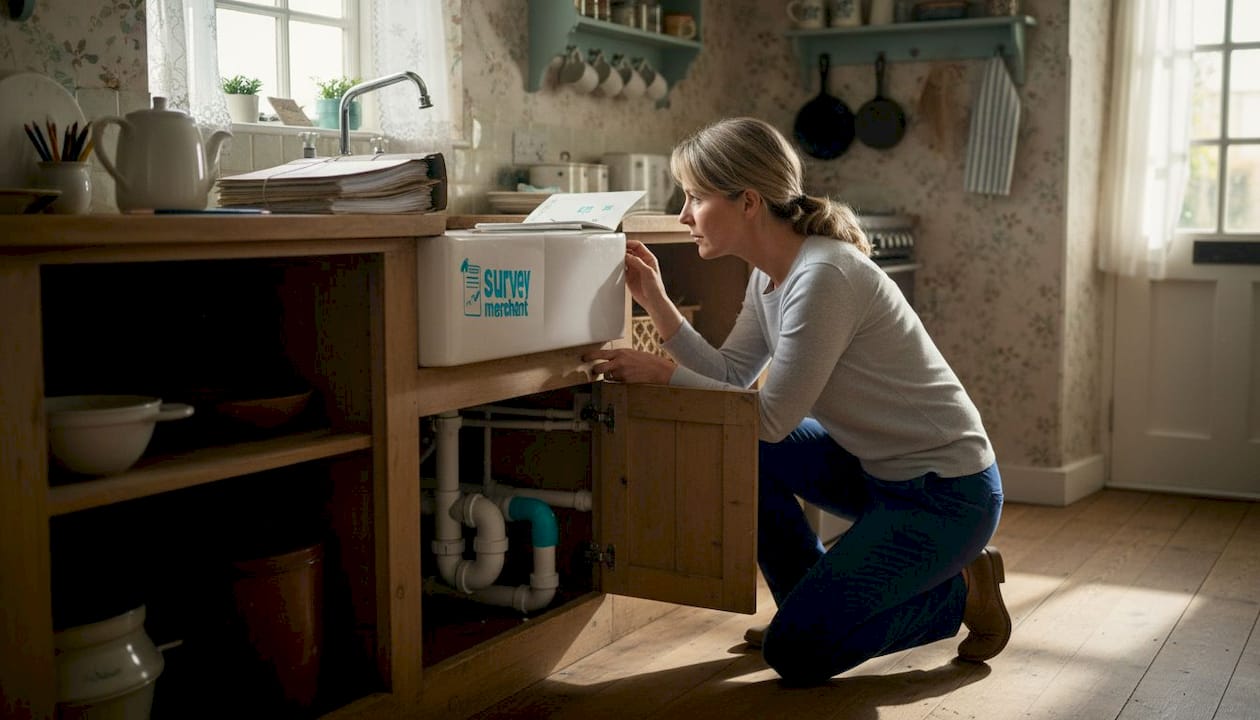
Pro Tip: Before booking any survey, walk the property once more specifically looking for signs of recent DIY, fresh plaster patches, or new paint in isolated spots. These can indicate attempts to conceal defects and are a strong reason to escalate to Level 3.
Even as you weigh up these factors, costs and coverage often tip the decision one way or another. It is worth being honest about what you are actually comparing when you look at survey prices.
| Level 2 survey | Level 3 survey | |
|---|---|---|
| Typical UK cost range | £400 to £900 | £700 to £1,800+ |
| Report length | 20 to 40 pages | 40 to 100+ pages |
| Surveyor time on site | 2 to 3 hours | 4 to 8 hours |
| Structural analysis included | Limited | Full |
| Reinspection or follow-up advice | Rarely included | Often included |
| Suitability for mortgage purposes | Yes, for standard properties | Yes, including complex cases |
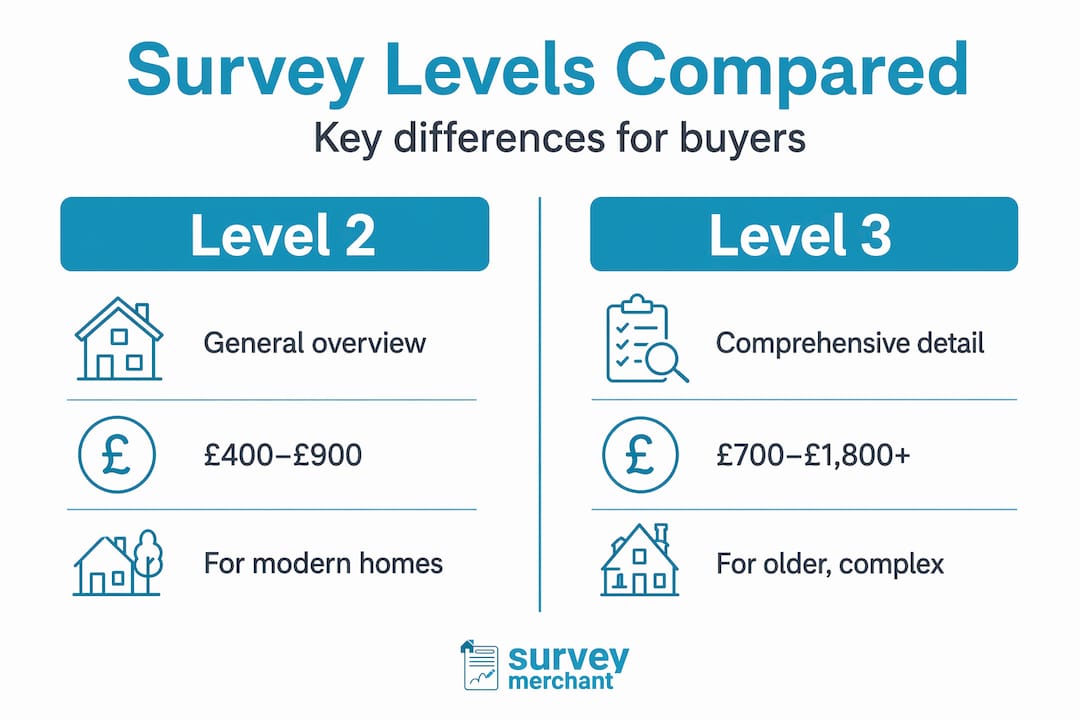
As the Level 3 survey costs guidance makes clear, Level 3 surveys are more expensive because they reflect significantly increased depth, time, and professional liability. But cost should be viewed in context. A £900 Level 3 survey that uncovers a structural fault requiring £25,000 of remedial work is arguably the best money you will spend in the entire transaction.
The value of a survey also extends beyond the survey itself. A well-evidenced set of findings gives you concrete grounds to renegotiate the purchase price or request that the seller carries out repairs before completion. Buyers regularly save sums that far exceed the survey fee simply by having documented evidence of defects in their hands during negotiations.
There is also the question of peace of mind. Moving into a property knowing that a qualified professional has thoroughly examined every accessible element of the building is genuinely different from moving in and hoping for the best. That psychological certainty has real value, particularly for first-time buyers or those purchasing in a new area without local knowledge.
The cheapest survey is not always the safest choice. For older, unusual, or visibly imperfect properties, choosing a Level 2 survey to save a few hundred pounds can result in carrying disproportionate financial risk into ownership.
Here is something that does not get said clearly enough in most property guides. Many buyers treat the survey as a procedural step to satisfy their mortgage lender. They book the cheapest option, receive a report full of technical language, skim it for red flags, and then proceed regardless. This approach treats a survey as a box to tick rather than the risk management tool it actually is.
This pattern plays out in real and painful ways. A buyer purchases a 1950s detached home using a Level 2 survey. The report flags a few minor issues. Eighteen months later, they discover that the property was built using non-standard steel frame construction and requires expensive specialist maintenance that no standard insurer will cover without significant premium uplift. A Level 3 surveyor would have identified the construction type, flagged the insurance implications, and provided detailed guidance. The Level 2 surveyor, through no fault of their own, simply was not commissioned to go that deep.
Even experienced buyers sometimes misunderstand survey limitations. They assume that because a surveyor visited the property and produced a report, everything significant has been examined. But a Level 2 surveyor is explicitly not commissioned to lift floors, move furniture, or access roof voids. Their findings are bounded by what is visible and accessible on the day. That is a reasonable scope for a straightforward modern property. It is not adequate for a Victorian terrace with a recent change of ownership, fresh decoration, and a loft that has been part-converted.
The guidance available for Level 2 for first-time buyers is genuinely helpful for those purchasing conventional homes. However, even first-time buyers should resist allowing budget anxiety to override a sound assessment of the property’s actual risk profile.
The real value of a survey is not the document itself. It is the actionable knowledge that document contains. A thick report with detailed findings that you act upon is infinitely more valuable than a thin report that lulls you into a false sense of security. Treat the survey as the most important professional opinion you will commission in the entire purchase process, and choose the level that genuinely serves the property in front of you.
Having understood what is at stake and how these surveys differ, here is how to take confident next steps.
Survey Merchant connects buyers and property owners across the UK with qualified, vetted surveyors who are matched to your specific property and circumstances. Whether you need guidance selecting between a Level 2 and Level 3 inspection, or you are ready to book, the platform makes the process straightforward and transparent. Explore the full range of building surveying services for residential properties, or find specialist support through commercial property surveys if your purchase is more complex. For buyers also requiring formal valuations, RICS valuation services are available through the same trusted network. Get the right advice before you commit, not after.
Usually, a Level 2 survey is sufficient for new builds, as Level 3 is best for older or significantly altered properties where structural complexity or defect risk is greater.
A Level 2 survey highlights visible issues but may not uncover hidden or structural defects. Level 3 surveys are more detailed and specifically suited to identifying defects that require deeper investigation.
Level 3 surveys typically cost between £700 and £1,800 or more compared to £400 to £900 for Level 2, with higher costs reflecting the increased depth, site time, and analytical detail involved.
Yes, many buyers use survey results to negotiate on repair costs or the overall purchase price, particularly where a Level 3 report provides detailed evidence of structural defects or significant maintenance requirements.
Survey Merchant provides vetted RICS surveyors across 100+ UK locations at fixed fees:
→ Level 2 Home Survey (HomeBuyer Report)
→ Level 3 Building Survey (full structural survey)
→ RICS Red Book property valuations
→ Party wall surveyors — notices, awards & schedules of condition
→ Expert witness surveyors — CPR Part 35 reports for property disputes